Premier Wynne – Important memo re public health care

Memo: To the Honourable Kathleen Wynne, Premier, Province of Ontario
From: Your new pals at OPSEU Diablogue

Dear Premier Wynne –

Imagine our surprise when we discovered in today’s newspaper that the public sector unions are in fact running government. We have to give thanks to PC Leader Tim Hudak for pointing this out, because we had no idea this had taken place.

Anybody who reads our BLOG will note that we have had many recent differences, ranging from your government’s addiction to costly private-public partnerships to the present round of deep cuts to our public hospitals. We know, you don’t call them cuts, you call it restructuring (now that we’re friends perhaps you’ll let us know where this work is being restructured so our members can pursue jobs there).

We thought we would start off with a basic principle – public is better.

Here’s the proof: at the dawn of Medicare in Canada, we spent about the same percentage of our economy on health care as the United States. That percentage has since gone up for both of us, but at a much faster rate in the United States where the majority of health care delivery is in private hands.

In 2010, the most recent year we have comparable international data, the U.S. was spending 17.6 per cent of its economic output on health care – both public and private. In Canada we spent 11.4 per cent. While we could do a lot better, our spending is comparable to countries such as France, Switzerland, Germany and the Netherlands. Incidentally, for all the panic about rising health care costs, Canada also spent 11.4 per cent of its economic output on health care in 2009.

Continue reading

Kingston P3: John Gerretsen should know better

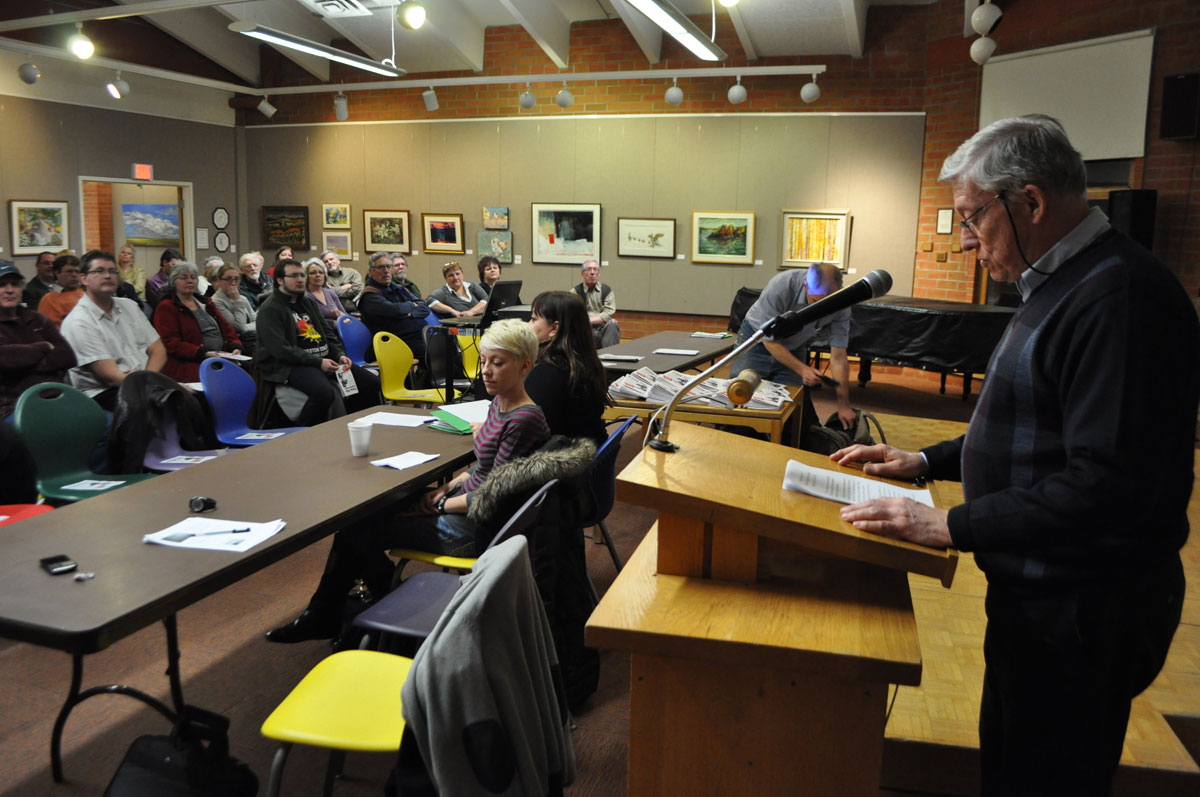
Carleton University's Hugh Armstrong speaks about P3s in Kingston March 4.

Carleton University’s Hugh Armstrong speaks about P3s in Kingston March 4.

KINGSTON – As a Minister of the Crown, Kingston MPP John Gerretsen should know better.

At yesterday’s anti-privatization rally in front of his Kingston constituency office, Gerretsen was steadfast in his assertion that the deficit rendered the government unable to build new hospitals without private involvement in the finance, design, construction and long-term maintenance of the building.

The protesters are upset by the government’s plans to use a public-private partnership (P3) deal to build a new hospital in Kingston. The new facility will replace the aging psychiatric and rehab hospitals.

At the same time, Gerretsen surprised the protesters by telling them he knew the P3 option was more expensive.

The suggestion is that somehow using the private sector takes the costs of doing these projects off the government accounts. This is completely untrue.

It’s a little like taking out your high interest VISA card as a solution to your debts.

You don’t have to take our word for it.

The Conference Board of Canada issued a report in 2010 funded largely by pro-P3 groups such as the Canadian Council for Public-Private Partnerships, PPP Canada and Partnerships BC. To say the report subsequently contains a pro-P3 bias is a massive understatement.

Despite this, the report acknowledges that the idea of taking these financial obligations off-book has no value.

Continue reading

Kingston to launch P3 plebiscite campaign today – and we’re part of it

Moshe Safdie is one of Canada’s most celebrated architects. Best known for Habitat 67, a model community housing complex built for Expo 67, Safdie is also the architect behind both the Vancouver Public Library Square and the National Gallery of Canada. For six years he was director of the Urban Design Program at the Harvard University Graduate School of Design.

He was originally signed with much fanfare in 2006 to design Montreal’s $1.3 billion McGill University Health Centre Hospital. In 2007 he dropped out when the Quebec government decided to develop the hospital as a public-private partnership (P3/PPP).

At the time he said developing the hospital as a P3 meant the opportunity to build a medical facility appropriate to the 21st Century was now lost.

“It’s in the nature of the beast when you do a PPP. You can call it cutting corners. The objective of the private developer, in order to win this project, is to produce the cheapest possible solution, (emphasis added)” Safdie told the media. “My experience is that the PPP process… is not going to lead either to innovation or anything outside the box, other than the minimal interpretation of the written specifications.”

Safdie must be relieved he dropped out when he did. The McGill hospital project has been at the centre of Quebec’s corruption probe.

Continue reading

Why you should care about March 4

This winter has been the season of our discontent. One after another hospitals have been announcing cuts to staff, beds and needed programs.

On Monday communities are planning to do something about it with support from the Ontario Health Coalition (See activist’s calendar at right).

Hospital funding is flat in this province. In real terms that means about a three per cent cut in funding after taking into account inflation, population growth and the impact of aging. Worst still, the plan is to keep underfunding hospitals for at least another three or four years.

Hospitals in this province are the most crowded among developed nations. If Ontario were a nation, it would top the OECD for the most jammed hospitals, Israel following a close second, the rest of Canada third.

It’s one thing to run a hotel at capacity, another thing to run a hospital that way.

Many countries try to keep their average hospital occupancy rate below 85 per cent. This is to help them with surge capacity and to limit the spread of hospital borne infections.

Continue reading

Pharmacare 2020: A remedy for an accident of history

UBC's Michael Law with Saskatchewan health policy analyst Steven Lewis.

UBC’s Michael Law with Saskatchewan health policy analyst Steven Lewis.

VANCOUVER – Canada’s Medicare system stops the minute a doctor writes a prescription.

On the second day of Pharmacare 2020, the talk turned to how we get to a quality system that will leave no Canadian behind, that will be efficient, accountable, and evidence-based.

Saskatoon health policy analyst Steven Lewis says leaving drug coverage out at the dawn of Medicare was an accident of history. If we were to create a pharmacare program from scratch, the task would be much easier. The problem is how do we transition from the house we built for ourselves to the one we want to live in?

Another audience participant astutely remarked that from the 30,000 foot level there is a great degree of consensus, but getting closer to the ground is going to be more difficult.

Lewis is blunt about the reasons why – a public pharmacare system would create winners and losers. Doctors would be the winners – a public pharmacare system would better mirror their existing practices. It would be more difficult for retail pharmacists who may need to define what their role is within the health system. Should they be remunerated as the owners or employees of a retail outlet, or should they join the mainstream of health professions and get remunerated based on the service they render to the public?

Continue reading

Pharmacare 2020: The evidence is clear, but where is the political will?

Jim Keon and Jody Shkrobot protect their turf during Pharmacare 2020 in Vancouver.

Jim Keon and Jody Shkrobot protect their turf during Pharmacare 2020 in Vancouver.

VANCOUVER – Almost 10 per cent of Canadians never fill their drug prescriptions. They can’t afford it.

We’re here in Vancouver for a unique forum to discuss what every major national health care system review over the last 50 years has recommended – the need for a national pharmacare program. We can no longer ignore the fact that universal access to prescription drugs is a necessary part of any modern health system. Canada is an outlier on the international stage – most countries have some form of universal pharmacare coverage for its citizens. Given the collective wealth of our nation, this is a major embarrassment. As one participant in Pharmacare 2020 noted, we have yet to enter the 21st century when it comes to drugs.

How different our health system might look should we have followed Justice Emmett M. Hall’s recommendations in 1964 that Canada move to a national pharmacare system with a $1 deductible on prescription drugs. Since then we have had the National Health Forum (1994-97) The Romanow Commission (2002) and the recent National Pharmaceutical Strategy which failed to come to any agreement on the objective of providing the basic minimum of catastrophic drug coverage. Seems the provinces could not agree not to bankrupt very ill citizens who are faced with steep drug costs.

It’s not like we are saving the public treasury money.

Continue reading

A major change in how we donate plasma

It was supposed to take place last fall. Now two private for-profit plasma collection centres are to open shortly in Toronto.

With approval from Health Canada it represents a major shift in how we deal with biological donations – the centres will be paying for plasma from donors contrary to the recommendations of both the Krever Inquiry and the World Health Organization.

Canadian Blood Services says they have nothing to do with the company, although they admitted to us last year that this is something they may reconsider in four or five years. The private company has no relationship with CBS’ counterpart in Quebec either.

Which raises the question of what this company is planning to do with all the plasma they are collecting? The most likely route is to sell it to fractionators in the United States to make intravenous products that could end up back in Canada.

Before Canadian Blood Services closed down the Thunder Bay plasma collection centre last April, plasma was getting shipped from northern Ontario to South Carolina for fractionation into something called Immunoglobulin, better known as IVIG. The IVIG was in turn sent back to CBS for distribution across Canada. CBS was supplying about 25 per cent of the plasma needed to make the Canadian supply of IVIG, the rest coming from American donors — many of whom would have got paid.

Continue reading

Nicaragua Day 9: “From misery to poverty”

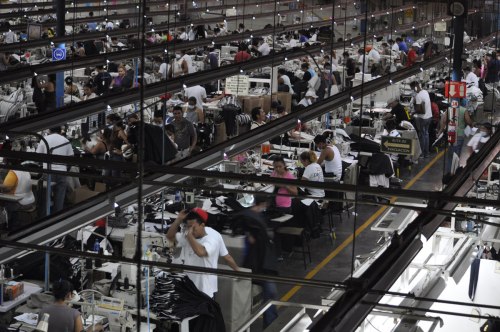
This is one of the better factories in the free trade zones.

This is one of the better factories in the free trade zones.

MANAGUA – At 5:30 am the sun is rising over the Las Mercedes industrial park. The walkway into the park is long, at times multiple railings appear as if organizing queues for a theme park. On either side is a tall chain link fence, giving the appearance that those who come this way are being funnelled into the factories beyond. At the very end is a sentry post where workers bags are inspected by guards before they head into the factories.

Along the walkway market stalls are being set up. It’s an instant mall for the workers, where they can buy anything from toilet paper to prescription drugs – no prescription required. The vendors know what their clientele will need over the course of the day.

We are here to hand out small booklets as part of a campaign organized by Maria Elena Cuadra, a women’s rights organization that is pushing for social change throughout Nicaragua. The booklets describe the contents of a new law about violence against women. This is significant in a country where violence against women, including rape, is not only commonplace, but deeply ingrained in the social culture.

The booklets were produced with funding from Oxfam and CIDA and have a little Canadian flag on the back.

The first few workers arrive and are happy to take the booklets. Soon it turns into a torrent as thousands of workers come down the walkway. We are prepared, the members of our delegation working with the women of MEC to get a booklet to everyone.

One man says he likes to hit women. Another man says he wants copies to give his friends and thinks the work MEC is doing in important.

The security guards do not hassle us, only asking that we shoot our video a little further away from the main gate. The new law is supported by the First Lady of Nicaragua, although the government appears to be doing little itself to advance the issue. The companies inside the gates are supportive and ask for their own copies.

MEC has loudspeakers at the entrance playing music in between ads promoting MEC’s campaign. The workers are well aware of who MEC are.

At 7 pm it stops abruptly, that last few workers trickling into the zone. When we see the emptied walkway it’s evident that not a single worker discarded the booklet.

On the way back to our bus the music was still playing and a bus driver was dancing on the steps of his vehicle while finishing the last of his breakfast. All around are numerous buses that have brought the workers here.

The free trade zones were begun in Nicaragua to attract investment. In an age of savage capitalism, the government of the day felt it necessary to get into the game. Free trade zones do not play by the same labour rules as the rest of the economy. Today more than 100,000 Nicaraguans work here for low pay and in often deplorable conditions. Most of these workers will start at 7 am and finish at 7 pm. Many will work longer than that if they have not met their production quota that day.

We are told that while the U.S.-owned factories are the best, it is the Korean factories that raise the ire of the workers. Women who have worked in these factories tell us of the difficulty in receiving the pay they are owed, in getting the factories to honour their state-legislated benefits, of monstrous working conditions including a limit of one visit to the toilet all day long. Another worker is assigned to time these toilet breaks. Some factories do not permit workers to move freely within the factory, insisting that they stay at their post for the full shift.

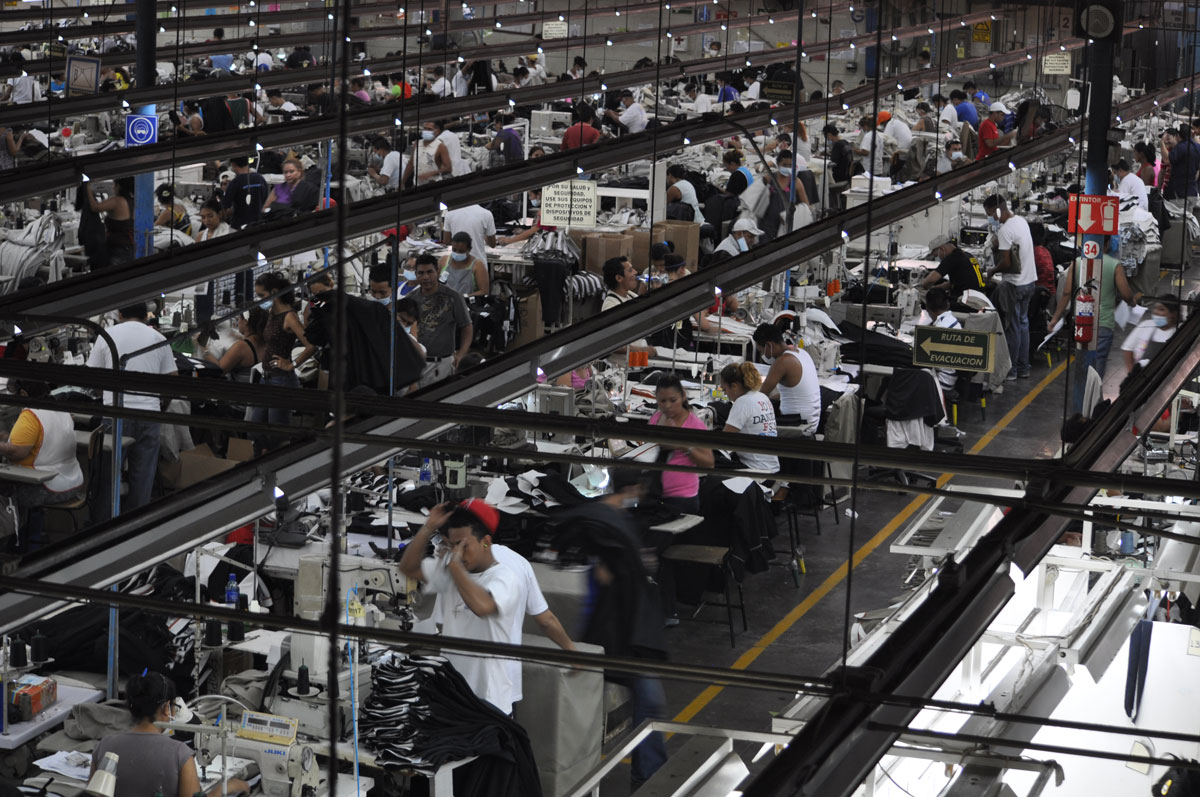
Factory workers make Levis Dockers at one of the better employers in the free trade zone.

Factory workers make Levis Dockers at one of the better employers in the free trade zone.

Later than morning we visit one of the better U.S. factories. The factory has been in existence for 12 years. For the past nine years the factory’s client has been Levis. Today the workers are making Dockers pants destined for the U.S. and Argentina.

It is unusual for us to be let inside one of these factories, but management here have had a good working relationship with both MEC and the local union.

Workers at the plant work from 7 am to 5:30 pm each day. They receive a 30-minute lunch and a morning break of 15-minutes. Minimum pay in this factory is $50 per week – which is high in the free trade zone. Minimum wage in the zone is $70 per month. Keep in mind an average family needs almost $500 a month to be able to afford the most basic of needs.

Continue reading

Nicaragua Day 8 – Fear of flying

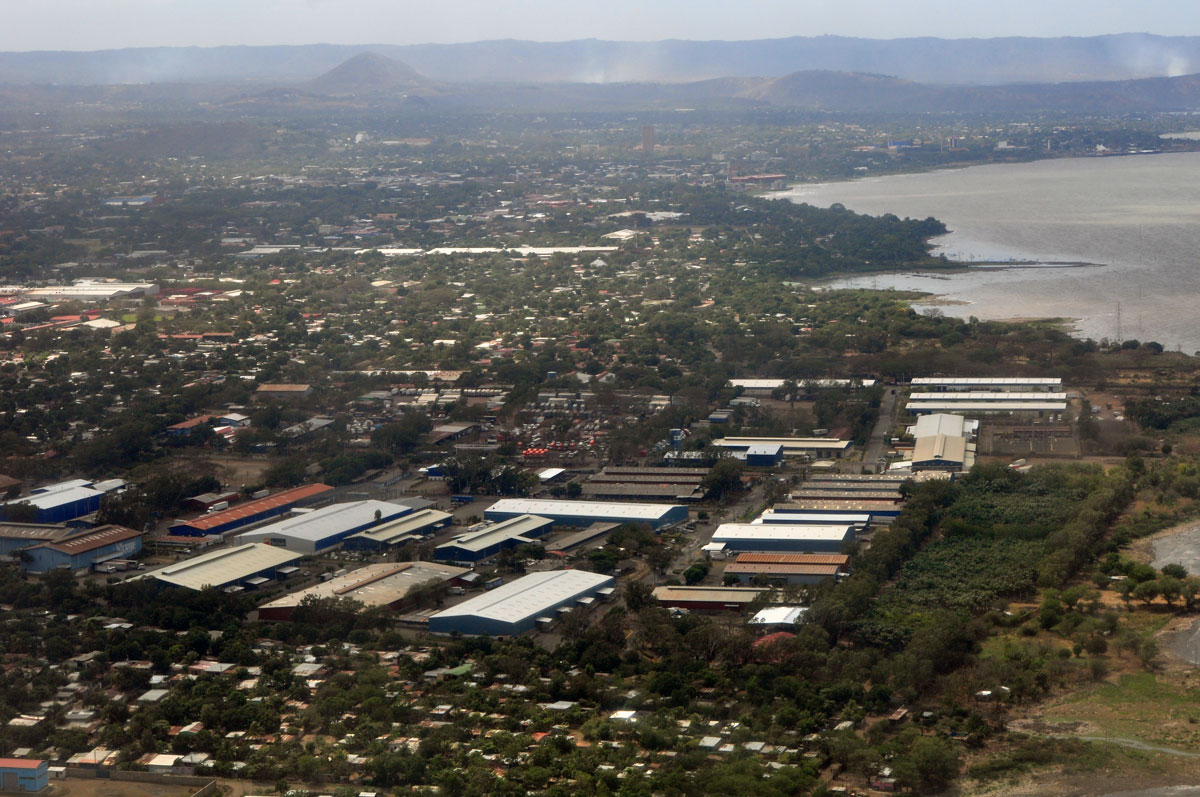
View of Managua from our flight.

View of Managua from our flight.

MANAGUA – Outside the Managua airport we were met by a representative from the Best Western hotel who asked about our flight. The Best Western Las Mercedes is located across the street from the airport, but still a van is required to take us there given the highway is not an easy crossing.

We asked if the hotel representative had ever been to the Atlantic Coast? He said no, that he had never flown in a plane. This is despite the fact that he worked to the sound of arrivals and take offs all day long. Like many who have never flown before, he said he was afraid to fly.

It’s an hour-long flight from Puerto Cabezas to Managua, from the Atlantic to the Pacific. The roads across the country are not good, and a bus will take up the better part of a day to undertake the same journey. Some travel through Honduras to reach the Atlantic Coast, but the route is not considered safe.

The day began with a previously unscheduled meeting with the Mayor of Puerto Cabezas. Reynaldo Francis Watson has only been in the job for a month, but he already looks like he carries the weight of the world on his shoulders.

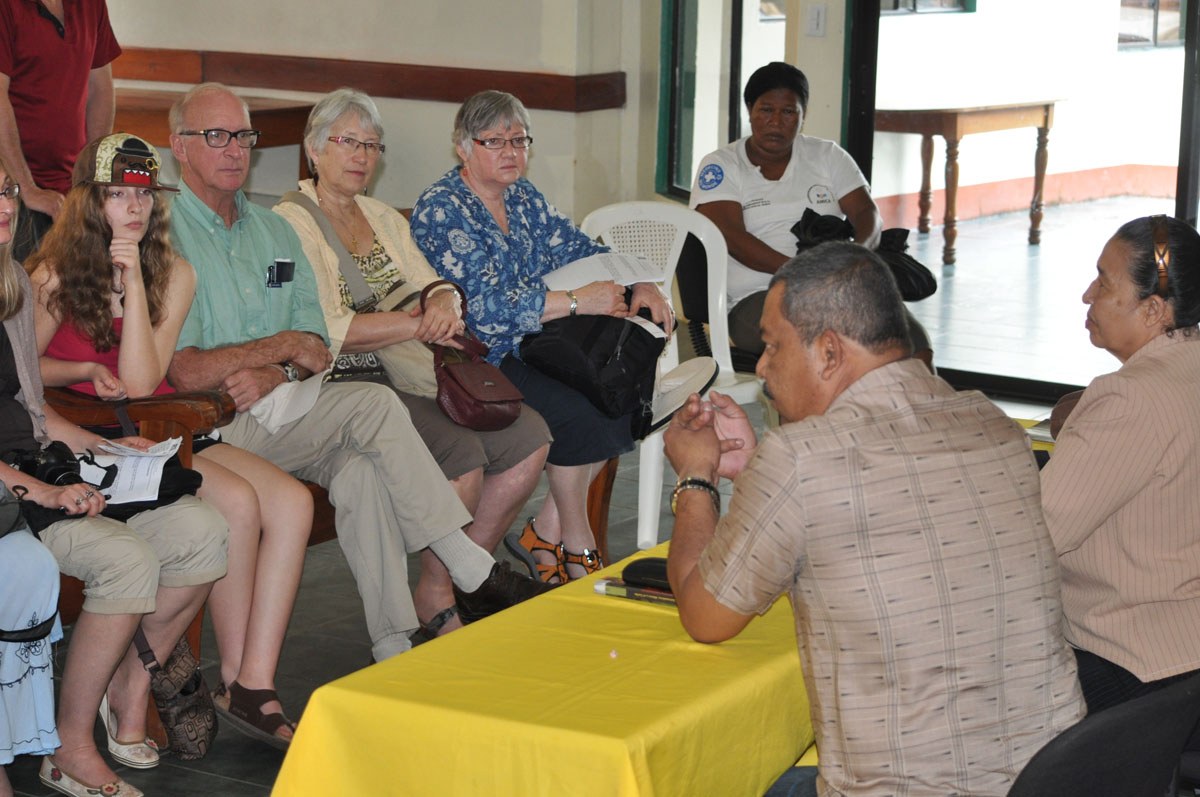
The Mayor of Puerto Cabezas addresses the delegation from Horizons of Friendship.

The Mayor of Puerto Cabezas addresses the delegation from Horizons of Friendship.

Puerto Cabezas extends far beyond the immediate urban area. It takes in more than 80 local communities and covers a region with 320,000 citizens. About 40 per cent of the municipality live in the city. More are coming every day.

wordpress_flag_c

The Mayor tells us that he has a budget of $1.6 million, about 250 municipal staff, and the city owns one garbage truck. Turns out we had seen it for the first time that morning – more of a dump truck than the garbage trucks we are accustomed to seeing on the streets of our Canadian municipalities.

Garbage is everywhere, often providing food for the wild dogs and cats that wander the city. Along the roadside we encounter smoke as residents burn their garbage in the streets. Passing a creek we noticed that it is full of plastic bags waiting for a torrential rainfall to wash it all out to sea.

Continue reading

Nicaragua Day 7: Some bumps along the road

Dog chases our bus on the highway to Santa Marta.

Dog chases our bus on the highway to Santa Marta.

SANTA MARTA – We were thankful for the rain. Without it we would have been forced to choose between the dust or the heat on the small Toyota bus as we made our way to Santa Marta. In Puerto Cabezas, none of the buses have air conditioning and opening the windows would have normally resulted in us choking from the dust rising up from the dirt highway.

The rain meant there was no dust, but it didn’t mean we would be spared the potholes which rattled us for almost two hours on our 60 kilometre journey. The bus itself was a hodge podge of seating cobbled together from other vehicles. The bench at the back of the bus was particularly stiff, sending us slipping both up and down and left and right as the driver swerved to miss the worst of the indentations on the road.

The highway turns into a dirt road before you even emerge from Puerto Cabezas, the landscape softly rolling before emerging onto a flat plain where the trees become fewer in number. You can count on one hand the number of vehicles we pass going in the opposite direction, most comprising motorcycles or trucks.

At the first village we encounter a rope across the road just before a wooden bridge fording a river. A soldier asks us the purpose of our visit given we are about to enter an area that is controlled by Miskitu indigenous peoples.

Continue reading