Tag Archives: Deb Matthews

Living Longer, Living Well: Muddled seniors strategy undermines universality of home care

There have been fewer than the usual suspects applauding the release of Living Longer, Living Well, Dr. Samir Sinha’s anticipated recommendations for a new seniors strategy for Ontario. In the early days of 2013, maybe nobody is yet paying attention.

Appointed provincial lead last year by Health Minister Deb Matthews, Sinha spent much of 2012 travelling the province and consulting with everyone it seems but organized labour (not that we’re bitter).

Promised for December, the subsequent report did not linger long in the Minister’s office before the highlights were released publicly yesterday. The full report is expected in the next few weeks.

Like last January’s provincial strategic plan, Dr. Sinha’s strategy seems to be long on lofty recommendations and somewhat short on logistics about how this all gets done, especially in an environment of considerable restraint.

Depending on where you sit on the political spectrum, you’ll likely find recommendations you like and recommendations that seem completely off the wall.

Continue reading

Campaign: Health4All asks Ontario to follow other provinces to protect refugee healthcare

Even right-wing Saskatchewan Premier Brad Wall thinks it’s wrong.

Recent cuts to the Interim Federal Health program for refugees have led to a storm of criticism by the medical community and provincial politicians across Canada.

While Immigration Minister Jason Kenney defends the cuts, stating excluded refugees will still receive essential care, a man was denied chemotherapy in Saskatchewan under the new rules and doctors are alleging more individuals in need are being turned away.

The Saskatchewan government stepped in and paid for the chemotherapy the Federal government denied. Wall told the National Post “it’s unbelievable that some of the decisions that have been taken federally are having this impact on people who are clearly the most vulnerable, refugees who are obviously fleeing something quite terrible – that’s why they are refugees.”

Saskatchewan is not alone. Quebec has stepped in to fill the gap, and Manitoba has said they will do the same and send the bill to the Federal government.

While Ontario Health Minister Deb Matthews has been critical of the cuts, she has made no announcement about helping disenfranchised refugees here in Ontario.

Continue reading

The best of Diablogue in 2012

It’s time for us to take our seasonal break and wish the best of the season to all our readers and posters. Next year will be challenging for health care activists as hospitals continue to shed services to balance their budgets, home care faces unrealistic and high expectations over relatively modest funding increases, bed shortages compound wait times in long-term care and all health providers try to find ways to better work together.

If you are new to our BLOG, or are an occasional viewer, you may have missed some of our postings throughout this year.

Here is a sampling of some of our more popular stories from 2012:

1. In recent days we have been unpacking the contents of the Auditor General’s chapter on long-term care in his 2012 annual report. Much of Ontario’s bed shortage problem is based on the Health Minister’s insistence on holding the line on opening new beds, noting Denmark’s success in diversifying long-term care options. But Denmark still has more nursing home beds per capita than Ontario and has made massive investments in home care. To read more, click here.

2.  When the province introduced its new Long Term Care Act, it was to include stepped up inspection. Problem is, they never hired enough long-term care inspectors to get the job done. Most Ontario nursing homes have not had a thorough inspection since 2009, and some may never see a detailed inspection. To read more, click here.

3. Norma Gunn won a disability rights award this year from the Ontario Federation of Labour for telling her own story about being assaulted at the Ontario Shores Centre for Mental Health Sciences and coping with the subsequent post traumatic stress disorder. A psychiatric nurse at the Whitby-based hospital, Gunn has been at the center of a struggle to reduce incidents of violence at the hospital. In recent days we’ve learned that CEO Glenna Raymond is stepping down in April. Will it be an opportunity for the hospital to press its own reset button on this issue and repair its relations with the staff who work there? To read more, click here.

4. This spring we were in Thunder Bay for a rally around the closure of the Canadian Blood Services plasma donor clinic.  Canadian Blood Services was created following the tainted blood scandal of the late 1980s and the subsequent inquiry by Justice Horace Krever. As we probed the decision by CBS to close down the Thunder Bay donation centre, we began to wonder if all the lessons from the inquiry were truly learned. To read more, click here.

5. One of our most popular stories this year was a posting about corporations stashing away record amounts of “dead” cash and the rich squirreling away billions in tax havens while insisting on further tax cuts. The impact is juxtaposed against a backdrop of hospital cuts across Ontario as the province claims it is broke. To read more, click here.

 6. This was the year that P3s (Public Private Partnerships) came back into the news. This summer we were reminded of how bad the situation is in Britain, the birthplace of these schemes. These so-called PFIs — Private Finance Initiatives — are saddling generations of Britons with a mountain of debt. Worse still, the actual value of these projects is about half the size of the accumulated debt, raising questions about value. Ontario represents more than half of such P3 projects taking place in Canada. To read more about the British experience, click here.

7. Ontario is the only province where the ombudsman does not have jurisdiction over the health sector. In BC the ombudsman has made significant contributions to staffing issues in that province’s long-term care homes. Why not here in Ontario? Click here.

8. What would Diablogue be without its bad hospital food stories? Truly if there is one issue that galvanises everyone — including hospital administrators concerned about patient satisfaction scores — it’s bad hospital food. Now the evidence would suggest it’s about more than just tasteless taters and mountains of wobbly Jello. Click here for more.

9. It’s a catch-22. We criticize much that takes place within our public health system. Then we defend the hell out of it when someone suggests we should replace it. This post reminds us of what it is we are fighting for. Click here.

10. Another of our more popular posts this year was the analysis of how former bank executive Don Drummond has skewed his economic projections to make it look like Ontario was in an even worse crisis than actually existed. To what end? Click here.

See you all back in January!

Managing scarcity in long term care

Managing scarcity can be very time consuming.

Ontario has been wrestling with rules around managing the shortage of long-term care beds, trying to find ways to meet sometimes contradictory objectives of freeing up hospital beds, reuniting spouses, accommodating veterans, prioritizing crisis placements and placing people on the wait list based on their assessment scores.

While the province is not shy about sharing their success in having recently reduced such waits, the Auditor General of Ontario (AG) is clear about the reason why – new criteria for admission is excluding between seven and 12 per cent of nursing home applicants. Unless the province is planning on continually tightening eligibility, the short-term wait list reduction is likely a one-time event.

The average length of stay in a long-term care home is about three years – that means about 25,000 of 76,000 beds become available each year. 32,000 people are on wait lists for their preferred nursing home. 40 per cent of those on that list are already in a long-term care bed but are still waiting to get into the home of their choice. According to the 2012 Auditor’s report, about 15 per cent die waiting to get into a home at all.

Continue reading

Worth repeating: We can do better — Matthews

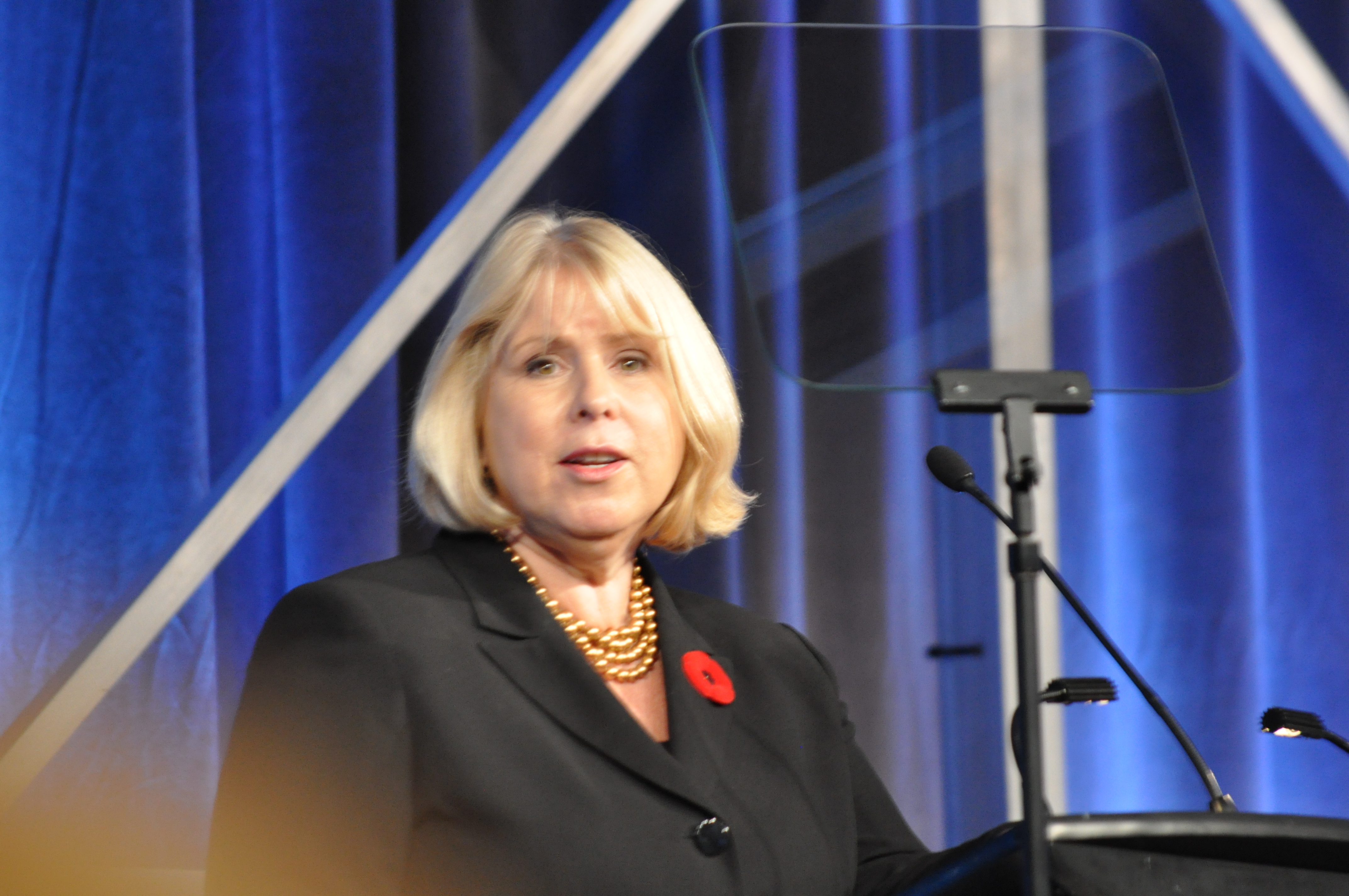
Health Minister Deb Matthews at the OHA HealthAchieve.

Health Minister Deb Matthews at the OHA HealthAchieve.

At today’s Ontario Hospital Association HealthAchieve Minister Deb Matthews gave an illustration of how integrated health service delivery can save money and enhance patient care. She makes clear that we do need to do better. The question is, will all these interlocking parts receive the funding and coordination they need to transition to this new world? In Deb Matthews own words:

“I want to tell you a story about Bernice. This is a true story. And I say thank you to the HNHB LHIN for this story. This is one patient’s story, Bernice. Only the name has been changed.

Bernice lives at home. CCAC visits once a week and her kids are regular visitors. One day, she falls and gashes her arm. She calls the ambulance, goes to the hospital by ambulance. They fix her up, send her on her way. Her family doctor isn’t notified, and there’s no follow-up care. When the CCAC next comes, they’re surprised to that she’s been injured.

A year later, Bernice falls again, and breaks her hip. Another ambulance trip to the hospital. She waits three days in the ER, then gets transferred to another hospital where she has surgery. She spends six months recovering in the hospital, and got MRSA. She sells her house and moves to long-term care.

So you look at five years of care for Bernice, we spent close to half a million dollars.

Now, we have to ask ourselves, did it have to be that way? Were we doing our collective best for Bernice?

So let’s imagine what that journey could have looked like.

Bernice lives at home. CCAC comes once a week and her kids are regular visitors. One day, she falls and gashes her arm. EMS comes, fixes her up right on the spot, notifies her GP on the spot and makes a geriatric assessment referral. Her children go with her to the appointment, and learn how they can improve Bernice’s functional ability. Bernice is enrolled in a falls prevention program, where she makes new friends and starts going to Bingo.

One day, leaving Bingo, she slips and falls on the ice and breaks her leg. She is taken to her local community hospital. Staff there call the designated referral hospital. Bernice is transferred there, has her surgery right away, then is transferred back to the community hospital where she recovers. A week later, she is discharged to a transitional care program for a month. Then she goes back home, with on-going support to maintain her functional ability.

Now that care would cost about $100,000 for five years. So when you look at the needs of real people and ask ourselves, are we doing our collective best? I think we all have to agree that we can do better.”

CBS: Deb Matthews’ indifference costing quality jobs in northern Ontario

Health Minister Deb Matthews is often regarded by the media as one of the front runners to replace Dalton McGuinty as Ontario Premier – a surprise given the intense scrutiny the Minister has been under for her role in the ORNGE air ambulance scandal.

Earlier this year we ran a series of stories about the April closure of the Canadian Blood Services plasma donation centre in Thunder Bay. At the time, Matthews showed little interest in defending the centre or the needed jobs in Northern Ontario – this despite the fact that Bill Mauro, a northern MPP in her caucus, was stating publicly that something didn’t smell right about the closure.

In the legislature she accepted CBS’ explanation that the plasma from Thunder Bay was not needed even though the organization’s annual report showed significant increases in imports of American-sourced plasma.

It is interesting to compare Matthews’ lack of interest over the fate of the Thunder Bay facility with that of the New Brunswick government over the closure of a CBS processing and distribution centre in Saint John.

In late 2009 the New Brunswick Liberal government learned that CBS planned to close the Saint John facility by 2012. Both the Liberals and Conservatives opposed the centralization of the centre’s activities to Dartmouth, Nova Scotia.

They were so furious the New Brunswick government even commissioned a KPMG report to look at the option of taking the province out of CBS altogether.

Continue reading

Vector Poll: Most Ontarians think McGuinty government is doing a poor job on major health priorities

Deb Matthews may want to get out more.

We’ve previously noted that Ontario’s Health Minister has made far fewer public speeches than her predecessors. The Ministry’s on-line speech archive lists two speeches for Matthews this year, one for last year. There have been a total of five press releases issued during the summer months (June to August), most dealing with basic alerts, such as reminding Ontarians to protect themselves from West Nile virus.

For a government intent on radically remaking the health system, there appears to be very little coming out of the Minister’s office. The effects are telling in a recent poll around the province’s long waited health action plan.

When the Local Health Integration Networks were formed, the province was charged with developing an overall health strategy. This was supposed to be the basis for the LHINs own integrated health service plans.

Continue reading

Bad week for private companies mining for profits in health care

This hasn’t been a good week for private companies mining big profits in Canada’s health system.

Quebec police are probing a hospital private-public partnership deal awarded to SNC Lavalin Group Inc according to the Globe and Mail.

Police raids took place at the McGill University Health Centre headquarters on Tuesday in what the Globe suggests will “threaten to tarnish one of Canada’s landmark private sector bids to build public infrastructure.”

The newspaper reports that up until recently, the project had been “overseen” by Riadh Ben Aissa, the former head of SNC’s construction division. Ben Aissa is presently in a Swiss jail in regard to allegations of corrupt payments to public officials in Africa.

Continue reading

Tory health care white paper elicits a big ho-hum

If the Tories thought that yesterday’s new health care white paper was likely to change the channel on the byelection defeats, they likely woke up this morning disappointed.

Despite health care’s long standing ranking as the number one issue among Ontarians, there was little media coverage of the white paper.

Of those that did comment, most appear baffled by the plan.

Health Minister Deb Matthews wondered why the paper had been authored by deputy health critic Bill Walker, and not Christine Elliott, who has far more experience in the health care portfolio.

Continue reading

PSW Registry – Many issues unresolved despite impending deadline

As the deadline approaches for home care personal support workers to register with the government’s new PSW Registry, key issues remain up in the air and are unlikely to be resolved soon. PSWs may very well ask what they are registering for?

Home care employers like the VON are telling their PSWs that they must be registered by the end of the month, but the government anticipates that only 70 per cent of the estimated 26,000 publicly funded home care PSWs will meet that deadline.

What happens to the 8,000 unregistered PSWs is anybody’s guess. The PSW Registry Steering Committee does acknowledge it hasn’t worked through the implications of mandatory registration or how it will be enforced. No kidding.

CUPE announced last week that they are departing from the steering committee, calling the Registry “a dollar-store form of regulation, which benefits the province at the expense of the rights and dignity of personal support workers.”

Continue reading