The Lean Debate – A “Wicked Disease”

John Seddon, a British occupational psychologist, has been a lightning rod for Lean promoters (which he refers to as “tool-heads) over his criticism of Lean.

Seddon bases his own work on Taiichi Ohno, the father of the Toyota Production System that Lean is also based on.

Seddon argues that industrial processes don’t adapt well to the service sector, where standardization often gets in the way of meeting the need for a variety of approaches, calling Lean a “wicked disease.”

“Lean as ‘tools and projects’ appeals to managers,” writes Seddon in one of his newsletters. ”Managers think they know what their problems are and they think tools training and projects will be useful. Managers like the idea (promoted by the lean tool-heads) that services should be standardized (big mistake). If they do get improvement it is marginal, often they end up worse but they don’t know because they are still measuring the wrong things (lean tool-heads don’t question targets or activity measures for example, indeed they don’t question management philosophy).”
Continue reading

The safety and well-being of health care workers and patients is linked — report

The safety and well-being of health care workers may be much more closely linked to that of their patients a new report states.

Developed in collaboration with three major U.S. research organizations, the report “Improving Patient and Worker Safety: Opportunities for Synergy, Collaboration and Innovation,” suggests not only that there is a connection between the two, but there may be “synergies” in addressing patient and worker safety together.

The report gives examples of how worker satisfaction and characteristics of the work environment affect patient outcomes, including:
• Patient satisfaction levels were lower in hospitals with more nurses who are dissatisfied or burned out;
• Lower perception of safety and teamwork among nurses was associated with increased odds of pressure ulcers in patients and increased nurse injury;
• A higher nurse per patient ratio was associated with fewer patient falls.

An organizational safety climate was also found to reduce worker stress among high risk patients.

Continue reading

Family Council Network Four launches long term care letter/petition campaign

Tired of broken promises on long-term care?

The Family Council Four Network – the largest of Family Council Networks in Ontario – is organizing a letter writing/petition campaign to improve long-term care.

The Council is asking that Ontario:

  • Immediately increase the number of paid hours of nursing and personal care per resident per day to 4.0 hours – as was promised in 2008;
  • Develop a plan to phase-in future increases to 5.0 hours by January 2015;
  • Establish a licensing body, such as a college, that will develop a process of registration, accreditation and certification for all Personal Support Workers (PSWs).

The Council argues that present PSW training is inconsistent and insufficient to deal with higher physical, psychological and emotional needs of residents.

If you support these goals, you can download a draft letter and petition at:

http://www.familycouncilmembers.net/wordpress/?p=1303

Edgewater Gardens: LTC Staffing cuts should be a red flag for Ministry, LHIN

We all remember former Health Minister George Smitherman tearfully promising a revolution in long-term care.

That revolution never really happened.

Now we’re beginning to wonder if modest gains made during the Smitherman years are now beginning to be reversed.

It’s been a while since the Ministry has offered us their estimate of hours of direct care nursing home residents are actually receiving. The most recent Ministry data we could find is from 2009.

Nursing homes have received a modest increase in funding this year – the largest amount going to the accommodations envelope (although the biggest percentage increase was for raw food). The smallest percentage increase went to direct care.

Last week Edgewater Gardens in Dunnville gave notice that they are reducing scheduled registered practical nurse (RPN) hours by 75 hours weekly effective February 15, 2013. The non-profit home adjacent to and operated by the Haldimand War Memorial Hospital, is putting a small portion of that back in the form of additional personal support (PSW) hours. The home says it is doing so to be “fiscally responsible,” meaning it’s about money, not about reorganizing the home to improve quality.

Continue reading

SBGHC: Small, rural, and looking to find $622,000

When the province introduced its new hospital funding formula, it specifically highlighted its intention not to subject small rural hospitals to it.

Evidently when the Minister meant small, she meant very small.

South Bruce Grey Health Centre is reporting that the new hospital funding formula means they will be facing a $622,000 shortfall next year.

SBGHC is made up of four very small hospital sites in Walkerton, Durham, Kincardine and Chesley. With four hospitals, it’s total budget is about $41.7 million, of which $29.5 million comes directly from the Ministry of Health (another $6.3 million comes in MOH physician funding).

The community makes the argument that had these four hospitals not been amalgamated, they would not be subject to this punitive funding formula.

Continue reading

“The practice of tyrants?”

Earlier this week we noted that evidence supporting the efficacy of flu shots specifically for health care workers has been weak.

Much of the anti-flu shot sentiment is based on a number of reviews by the Cochrane Collaboration (CC). The CC is a respected non-profit network of 28,000 people over 100 countries that produce reviews to help decision-makers make evidence-based decisions on health care.

The CC has turned out a number of papers on the efficacy of flu shots as a preventative measure in health care settings.

What the reviews most commonly state is that there is little research free of bias (that is, not sponsored by vaccine companies who have an interest in the outcome) to come to any evidence-based conclusion. Cochrane notes the specific need for high-quality randomized trials.

Continue reading

NUPGE Video: Canada has become a radically unequal country

Our colleagues at NUPGE have put together this excellent video on income inequality as part of their All Together Now campaign. In just six minutes the video provides an analysis on why divisions in Canada are deepening and why trust is disappearing. Please share with others!

The trouble with Lean

Are you Lean, becoming Lean, doing Lean or thinking Lean?

Almost the entire province of Saskatchewan has gone Lean.

On the surface Lean offers everything front line workers should want. It is a system that addresses work process and reduces waste. It looks at the appropriate use of tools, including us humans. It allows for continual process improvement with a focus on quality. It involves and values front line workers in process design. Some managers claim it even saves money that can be reallocated elsewhere.

So why is it we hate it so much?

Lean is a system of continuous process improvement that originated at Japan’s Toyota in the 1930s (sometimes misidentified as the Toyota Productions System – TPS), although founder Taiichi Ohno admits that he generously ripped off Henry Ford for many of his process ideas. Others say the origins go back thousands of years to Africa. The term Lean itself came from a 1988 article on Toyota’s management system by an MIT student.

While initially geared to assembly line manufacturing, Lean has expanded in recent years to include the service sector.

Continue reading

Flu vaccine – CMAJ says it should be mandatory for health care workers

It’s a question of individual rights versus collective rights. The evidence is far from perfect, and the issue highly divisive among health care workers.

The influential Canadian Medical Association Journal raised many eyebrows when it recently took the position that all people who work in a health care institution be vaccinated for influenza.

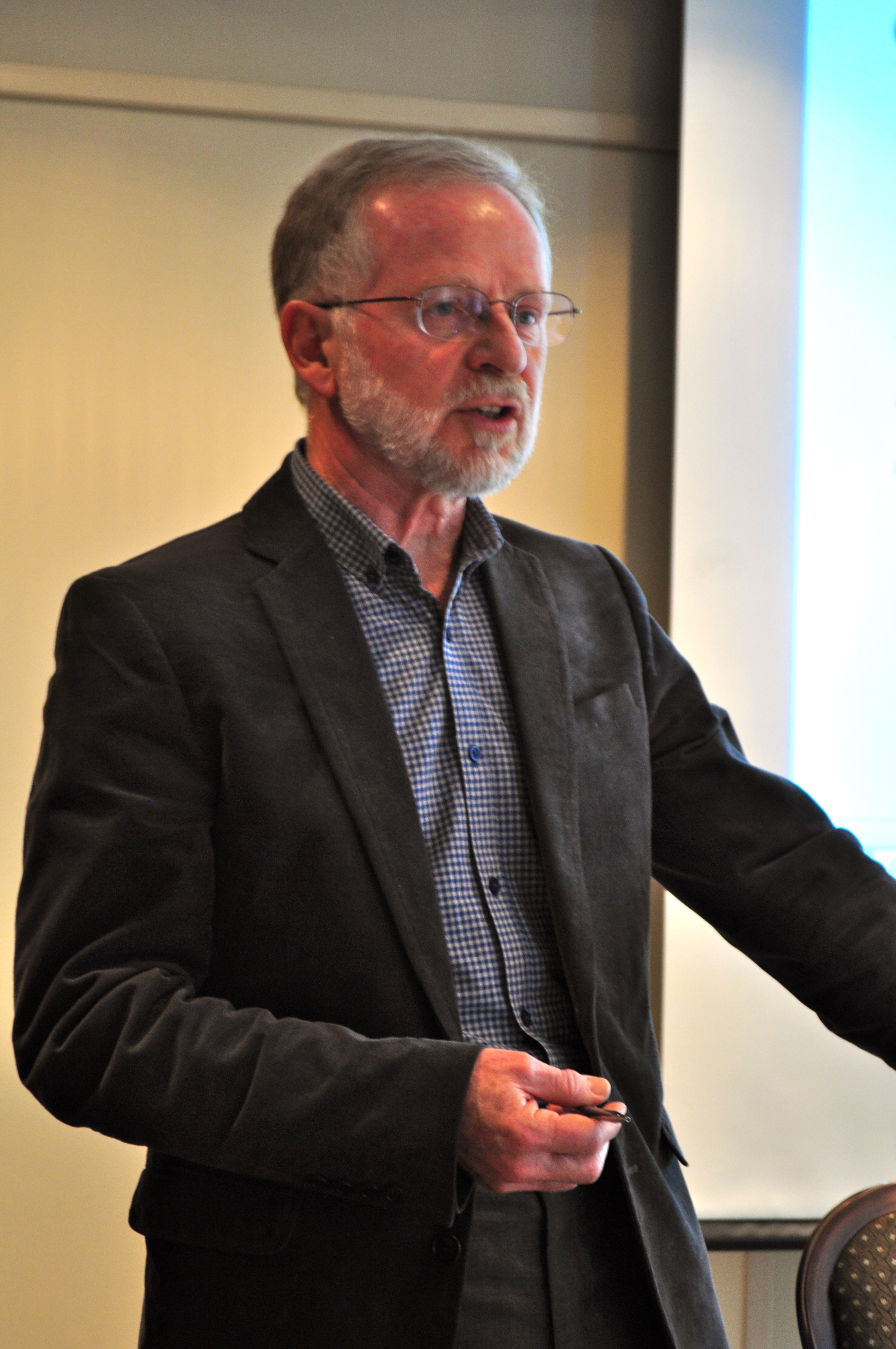
The CMAJ’s Dr. Ken Flegel says the views are those of the editors of the Journal, not that of the Canadian Medical Association. There’s a good reason for that – most doctors do not get the annual flu shot. Speaking to a Toronto meeting of the National Union’s Canadian Health Professional Secretariat on November 20, Flegel laid down a challenge to the group: increase voluntary vaccination rates to avoid having the flu vaccine made mandatory in your province.

Dr. Ken Flegel

Dr. Ken Flegel, Senior Associate Editor of the Canadian Medical Association Journal.

British Columbia is the first Canadian province to take that step — a move health care workers in that province are challenging. While many support the need for broader vaccination rates, most unions are reluctant to give up the autonomy of health care workers to decide what goes into their body.

In Ontario many health care employers have defacto mandatory requirements – if you don’t get the shot, you don’t work under certain circumstances. Others are more willing to move unvaccinated health care workers to environments where there is less risk to patients or suggest that workers use up vacation credits when an outbreak takes place.

According to Flegel about 40 per cent of Canadian health care workers take the annual vaccine despite the fact that 10 to 20 per cent of health care workers are likely to get the annual influenza.

Continue reading

10 Insights from the Action Assembly Weekend

“Either I pay taxes or have my mother live with me,” said Neil Brooks with a sly smile. Brooks, co-author of The Trouble With Billionaires (with Linda McQuaig) underlined the value of taxes during the keynote address at this year’s Ontario Health Coalition (OHC) Action Assembly Weekend.

Brooks said that as we shift the line between what’s public and what’s private, the cost to individuals rises as government services become far more expensive to replace privately.

The Action Assembly is the OHC’s annual meeting to plan priorities for the coming year as well as review the victories of the previous one.

November 17-18 the meeting hall at the University of Toronto’s Hart House was packed as health care activists travelled from across the province to meet.

Here are 10 insight moments from this year’s 2-day meeting:

1. Switzerland is a criminal state. Neil Brooks, a tax law professor at Osgoode Law School, said governments have begun to recognize how much money they are losing to tax havens that protect the wealthy from paying their fair share back in their country of residence. It is estimated that $20-$30 trillion is salted away in tax havens, resulting in the loss of billions of dollars to public treasuries. Brooks says more money is leaving Africa for tax havens than all foreign aid coming to the continent.

Neil Brooks, law professor and author.

Neil Brooks, law professor and author.

2. Actor Michael Caine says increasing taxes on the wealthy amounts to government interference. But Brooks suggests that Caine is overlooking the copyright laws passed by the same government that secure his wealth. When it benefits the wealthy, it’s not interference or big government. As top marginal tax rates dramatically decreased in the last 30 years, so did the spread between income growth between the wealthy and the rest of us. Brooks says that with the massive number of films Caine has made, the odds would suggest some of them had to be good.

Continue reading