Elopement poses urgent questions about Waypoint’s new $474 million building

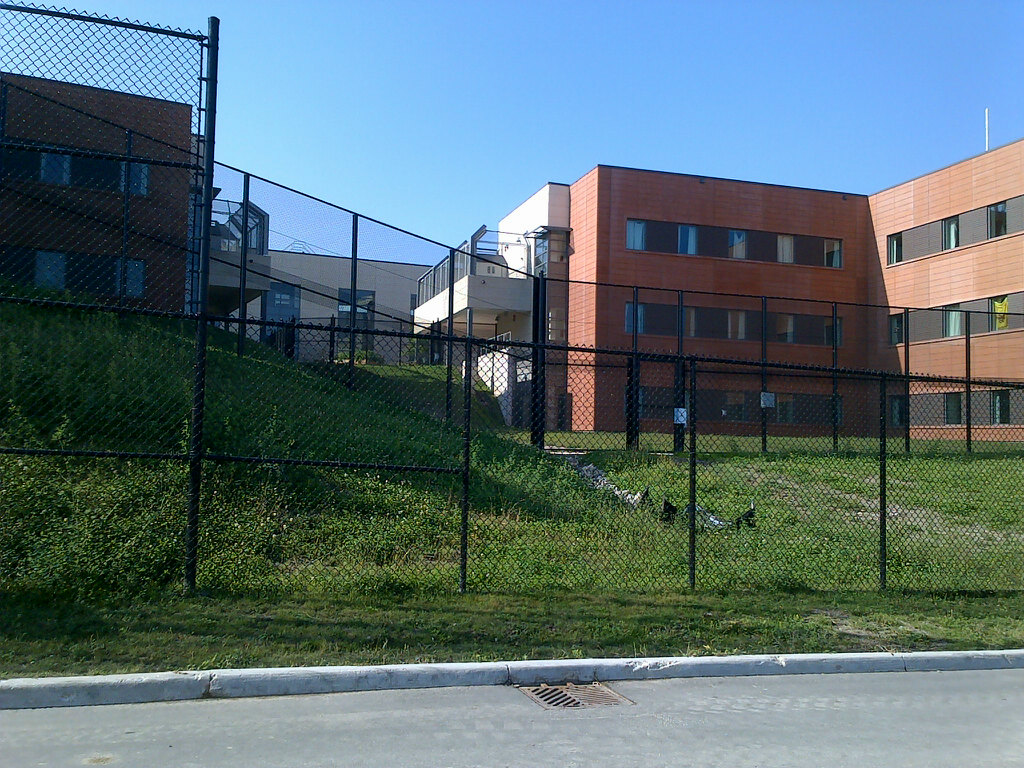
Photograph of the fences scaled by a maximum security patient August 23 at Waypoint Centre for Mental Health Care.

Fences scaled by a maximum security patient August 23 at Waypoint Centre for Mental Health Care.

A new building is often seen as a solution for the updated delivery of health care.

It’s true they usually reduce energy costs. If designed correctly and collaboratively, they can also contribute to higher operational efficiency.

Ontario invested heavily in new hospital buildings under former Premier Dalton McGuinty. At one point we counted about 100 major hospital infrastructure projects in the works – about a third developed as public-private partnerships.

Many of these buildings are now open or will be shortly. After moving in, administrators and staff are discovering the shortcomings that often aren’t evident in the planning stage.

One of them is Waypoint Centre for Mental Health Care in Penetanguishene. Waypoint moved both medium and maximum security units into its new $474 million building in May.

Continue reading

Home Care: Giving and taking away

Photograph of ParaMed staff picketing outside of their Pembroke offices in July. 140 Renfrew County home care workers could be on strike as soon as September 2.

ParaMed staff picket outside their Pembroke office in July. 140 Renfrew County home care workers could be on strike as soon as September 2.

The government gives, the home care agencies take away.

Many of OPSEU’s home care agencies are presently at the bargaining table.

You’d think this would be the best of times for the professional and support staff that conducts the often difficult work of caring for Ontario’s homebound frail and elderly. Retaining this group of workers is also important to government bean counters who can add up the cost of lengthy stays in hospital by alternative level of care patients waiting for home care access.

Clearly of all sectors, home care has also become central to the government’s strategy to migrate services into the community.

So why can’t they get it right?

Ontario did recognize there is a significant problem with recruitment and retention in home care, taking what appeared to be a bold step towards increasing specific funding for the sector’s personal support workers (PSWs). PSWs delivered 72.3 per cent of all home care visits in 2012/13 and that percentage is growing as visits by licensed health professionals (nurses, dietitians, social workers and therapists) have been in decline over the past decade.

As we noted yesterday, the turnover is so high among home care PSWs that often the entire staff of an agency can change in less than two years.

Continue reading

Two-thirds of Ontario PSWs excluded from wage adjustment

Photograph of former Health Minister Deb Matthews with Finance Minister Charles Sousa announcing the breakthrough increase for PSWs in April.

Former Health Minister Deb Matthews with Finance Minister Charles Sousa announcing the breakthrough increase for PSWs in April. (Photo: Ontario Government).

It was clear from the start that the much applauded increase for Ontario’s Personal Support Workers was not going to apply to all.

Back in April the government noted that “more than 34,000 of Ontario’s PSWs deliver care, assistance and support to seniors and other people with complex care needs in their own homes and communities.”

That was the target group for Ontario’s new funding aimed at bringing stability to a workforce that was turning over every two years or less. Given the emphasis on continuity of care as a measure of quality, this high level of turnover was evidence of colossal failure the Wynne government couldn’t ignore.

These 34,000 represent only about a third of the PSWs in the province. That means for two-thirds, there will be no additional adjustment outside of their existing collective agreement or individual non-union contract.

Only these 34,000 PSWs will receive the $1.50 an hour increase retroactive to April 1st of this year. Those wage adjustments and retroactive pay are expected in September.

The government has committed to increase the hourly rate for this group by a total of $4 an hour by April 1, 2016. By 2016 the new minimum wage for PSWs will be $16.50/hour.

Given the scope of the plan issued in April, it was no surprise that PSWs working in hospitals and long-term care homes would be excluded by the government from this new funding.

What is surprising is news that the government has arbitrarily excluded a significant group of PSWs who do work within the home and community sector. According to a brief released by CUPE, the government is denying the same increase to those who exclusively provide homemaking and work in community mental health/supportive housing. Earlier descriptions suggested these PSWs would likely be in the target group.

In some cases, these excluded workers are often employed by the same agencies that will be passing on increases to their colleagues who provide personal care.

Continue reading

One helluva story

Photograph of Glenn French, President and CEO of the Canadian Initiative on Workplace Violence.

Glenn French, President and CEO of the Canadian Initiative on Workplace Violence.

Glenn French has a helluva story to tell.

The President and CEO of the Canadian Initiative on Workplace violence provided the keynote speech after two days of meetings by OPSEU’s Mental Health Division.

He spoke about a cleaner in a long-term residential facility in Newfoundland.

The man was well-liked and enjoyed his work.

One day he was struck with a lamp by a resident in a senseless act of violence.

While his colleagues quickly attended to the perpetrator of the act, nobody attended to the cleaner, who took himself off to what he perceived would be a safe place. It was an hour before anyone had thought to give any attention to the victim.

French says that when violence happens in the workplace it has a ripple effect, like a stone being thrown into a pond.

Continue reading

Mental Health: No easy answers, but there are still answers

Photograph of Nancy Casselman, TEGH's Director of Human Resources and Organizational Quality, Safety and Wellness.

Nancy Casselman, TEGH’s Director of Human Resources and Organizational Quality, Safety and Wellness.

There are no easy answers, but that doesn’t mean there aren’t answers.

We’ve been meeting in downtown Toronto to try and tackle the issues behind the injuries front line professional and support staff are sustaining by simply going to work to help others recover from or cope with a mental illness.

We know that individuals with a mental illness are no more likely to physically and verbally strike out than anyone else.

The evidence is clear — this is not even a debate.

Queen’s University professor Dr. Heather Stuart pointed out that only three per cent of violent crimes are committed by individuals with a serious mental illness. There’s another seven per cent committed by those with addictions.

Yet in popular culture that perception is much greater. Stuart points out that in the world of popular fiction that rate is closer to 20 per cent. When one in five violent crimes are committed on TV by fictional mentally ill people, what does that tell us? How does that shape our view?

Academics, clinicians, and other experts – including our own members – have been spending the past day trying to solve the riddle poised by the very real injuries these front line workers are sustaining. On paper this is not supposed to happen – at least not to this extent.

Nor is it exclusive to this one corner of health care.

Continue reading

The day after: health care issues still smoldering

There’s got to be a morning after.

Tim Hudak has announced he is stepping down and the Kathleen Wynne Liberals now have a majority parliament.

So what happens now?

There are several outstanding issues in health care.

The first is the fate of the Local Health Integration Networks. The standing committee charged with conducting the legislated review travelled the province holding hearings over the winter. Despite Tim Hudak’s promise to replace them with “health hubs,” there was little interest in the issue on the campaign trail. The likely result will be some minor tinkering and they will soldier on. After eight years the LHINs appear to have found their legs although clearly there are still some community members who feel left out of the process. Last year’s five per cent cut to their budgets likely didn’t help the LHINs connect with those communities.

We’ve noticed that despite a province-wide Ontario Health Coalition campaign opposing the siphoning off of hospital services to private clinics, the province is moving forward with competitions to auction cataract surgeries, endoscopies and other diagnostic services. The Windsor Regional Hospital is already in one of these competitions with the private MyHealth Vision Care. MyHealth manages 16 Independent Health Facilities in Ontario and say they are developing 18 more. The hospital is the midst of capital planning for a new outpatient facility. Being caught in these kind of arbitrary competitions makes it difficult to plan. CEO David Musyj told the Windsor Star that the cataract decision will have an effect on the entire health system. “We don’t want to do something prematurely that negatively impacts what we’re trying to create into the future for the community.” The Wynne government could find themselves in a considerable battle over this issue. The Ontario Health Coalition have collected nearly 100,000 postcards from Ontarians who don’t want to see private clinics take over this work. They plan to present the postcards to Queen’s Park soon.

Continue reading

Tories can’t add — Hudak way off on LHIN savings

Photo of 32 staff at the Central East Local Health Integration Network. The Tories suggest the Local Health Integration Networks have an average of 142 staff, which is not true.

The entire staff of the Central East LHIN. Does this look like 142 people to you?

Somebody please go to the buck store and get PC leader Tim Hudak a calculator.

We previously reported that the Tories long-standing pledge to eliminate the Local Health Integration Networks (LHINs) was missing from their platform.

Tim Hudak did eventually get around to the issue, renewing this promise.

Unfortunately, the promise also revealed more bad math. Far from being a “straight shooter,” Hudak’s campaign appears to be untroubled about facts.

Inside Queen’s Park reported yesterday that Hudak said he will cut 2,000 positions at the LHINs and save about $250 million.

Really?

Given there are 14 LHINs that would represent an average staff of 142.8 and an operating budget of nearly $18 million each.

We’ve sat through enough LHIN board meetings to realize this is way off. That prompted us to trek through the 14 annual reports presented on-line by the LHINs to check out their audited statements. We also went looking for their staff directories to add ‘em up.

Continue reading

Who’s values will prevail on Thursday?

Whoever shows up to the polls tomorrow may determine Ontario’s next Premier and whether she or he enjoys a majority or minority government.

The question is, will that be decided by a majority of Ontarians, or will it reflect a different set of values decided upon by a much more motivated minority?

We do know that turnout to the advance polls was six per cent lower than last time, when the current minority government was decided by less than half of the eligible voters.

Worst still, according to ThreeHundredEight.com, only about one in four eligible voters admit that they have been following the election closely.

All you have to do is look around your community to observe so many fewer election signs.

That’s frightening given what is at stake.

Continue reading

The end of efficiency – will appropriate care become the new system of rationing hospital services?

Former OHA President Tom Closson speaking at Longwood's Breakfast With The Chiefs June 10.

Former OHA President Tom Closson speaking at Longwood’s Breakfast With The Chiefs June 10.

The relentless pursuit of efficiency may be coming to an end for Ontario hospitals.

Thank goodness.

As former OHA chief Tom Closson said today at Longwood’s Breakfast With The Chiefs forum, year after year it gets more difficult for hospital CEOs to balance their budgets — “you can’t cut the same thing as you cut last year.”

This hardly means that hospitals are about to enter a new era of sustainable funding, especially in Ontario where public health care spending is already the lowest per capita of any Canadian province. Closson says Ontario hospitals also have the lowest worked hours per weighted case, the shortest length of stay in acute care, and the fewest beds per capita.

Have we found bottom yet?

Closson says we still have to reduce costs “because we have to.” Instead of seeking more efficiency, a new approach is needed.

Closson was joined by the Hay Group’s Mark Hundert and Chris Helyar to preach the new orthodoxy of appropriateness and to suggest that the HBAM (Hospital Based Allocation Model) of funding needs fixing.

Continue reading

Greens leave out health care from their streamlined platform

The Greens had an in-depth party platform on health care in 2011. In this election they can barely bring themselves the say the word “health.”

The only mention it gets in the Greens streamlined platform is around poverty reduction and their commitment to double the exemption for small business to pay the employer health tax. That, incidentally, means less health care revenue.

Last time out they were raising warning bells about health care sustainability while promising billions more for seniors care and the interdisciplinary primary care sector. Despite the endless scandals around long-term care, they wanted to cut the number of regulations that protect frail residents in Ontario’s nursing homes. They also wanted to make the LHINs more responsive to their communities.

This time the Greens plan to tackle poverty reduction by setting a longer term goal of establishing a guaranteed annual income for all citizens, not just seniors. In the meantime they would double the Ontario Child Benefit for children of families who live close to the poverty line. There is also a vague commitment around youth unemployment, although it goes no further than urging young people “to tell us what they have to offer … we want to hear about their great ideas.”

Continue reading