Category Archives: Uncategorized

Straight Talk: Beds so old it’s sometimes hard to find parts

If there is job security for someone like John Hopkins it’s because hospitals are increasingly having to make do with what they have.

A maintenance mechanic with South Grey Bruce Health Services, Hopkins is continually called upon to make basic equipment repairs. That includes finding parts for aging beds at the four-site rural hospital.

“I liked tinkering with things as a kid,” says Hopkins, including destroying several of his parent’s audio tape decks by taking them apart.

The fact that somebody like Hopkins is kept frequently “tinkering” says a lot about the state of Ontario’s hospitals. Years of funding freezes are taking their toll on both staff and equipment.

Watch John’s story by clicking on the window above.

Blood services staff fuming over blame for low inventory

Photograph: A fire destroyed this  blood service mobile unit over the summer. Amid the lowest inventory levels in six years, CBS executives have decided not to replace it or the 7500 units of blood it collects annually.

A fire destroyed this blood service mobile unit over the summer. Amid the lowest inventory levels in six years, CBS executives have decided not to replace it or the 7500 units of blood it collects annually.

Canadian Blood Services is telling staff that national blood inventory levels are at their lowest since 2008.

In a memo sent out September 30, Chief Supply Chain Officer Ian Mumford calls it “a serious performance gap,” leaving an already demoralized staff to wonder if they are being blamed for poor decisions made by the organization’s executives.

CBS has been dismantling much of its infrastructure around volunteer collections in recent years, including the closures of entire facilities in Thunder Bay, Ontario and Saint John, New Brunswick in 2012.

When an Ottawa-based bloodmobile caught fire this summer, CBS thought the volumes generated by it were insignificant and chose not to use the insurance to replace it. That blood mobile collected 7500 units a year.

Another mobile truck that could generate similar volumes has been sitting idle in an Ottawa yard for most of the year.

When appeals are issued, the call center staff in Sudbury are usually swamped. We’re told the phones ring off the hook and there are too few staff to answer all of these calls. That too has an impact on inventory — but that’s not all.

Continue reading

Pro-rating funding for PSW wages creates unintended consequences

Photo of PSW with client. Caption: More than nine months after expressing Ontario's intention to retain PSWs,  implementation continues to hit major bumps in the road.

More than nine months after expressing Ontario’s intention to retain PSWs, implementation continues to hit major bumps in the road.(CanStock Photo)

In 2010 a provincial coalition of experts was assembled to look an integrated hospice palliative care system in Ontario.

Hospices are a specialized residential facility for palliative care patients. As the coalition’s report states, “hospice palliative care is a philosophy of care that aims to relieve suffering and improve the quality of living and dying.”

To do that the government relies on these hospices to produce a substantial portion of own-source revenue, most of that coming through fundraising.

Among the many recommendations in the four-year-old coalition report is one to increase the percentage of public funding for Ontario’s hospices to 80 per cent of their operating expenses. Presently it is about 50 per cent.

It may be wise to keep that in mind as the hospices now grapple with unexpected costs associated with the government’s initiative to improve PSW wages and address the sector’s ongoing recruitment and retention issues.

Continue reading

Will health care derail the 2017 target for balancing the books? Not likely.

Picture of coins to illustrate folly of the Conference Board of Canada's health care projections.

The Conference Board suggests that a 4.5 per cent annual increase in health spending will derail plans for a balanced budget in 2017. The thing is, that’s more than double the rate of increase the Wynne government is presently spending on health. (Canstock Photo)

The Conference Board of Canada likes to tell the world that it is independent and unbiased, but a quick look at its board of directors will reveal that it is mostly dominated by leaders from Canada’s corporate sector.

That includes representatives from banking, energy, insurance, and telecommunications, to name but a few of the private sectors chiefs that dominate the board. There are also, for good measure, a handful of board members from the public sector, including two university presidents and one hospital CEO, Michelle DiEmanuele from Trillium Health Partners.

DiEmanuele should be very familiar with what Ontario is spending on health care given Trillium has been subject to the same freeze on base funding that other public hospitals have experienced.

Overall Ontario budgeted for a 2.2 increase in nominal funding for the health care sector in 2014-15. Factor in the present inflation rate of 2.5 per cent (August CPI – Stats Canada), that means health care experienced an overall drop in real inflation-adjusted funding of -0.3 per cent. Add to that the impact of population growth and aging, the real cost pressures are probably closer to 4.5 per cent.

Continue reading

Ontario keeps its secrets as hospital labs may face more privatization

The Ministry of Health has only promised to release a redacted version of a Deloitte report that may shape the future of lab services in Ontario. (Canstock Photo)

The Ministry of Health has only promised to release a redacted version of a Deloitte report that may shape the future of lab services in Ontario. (Canstock Photo)

The Ontario government has been less than transparent when it comes to the future of its public medical laboratories.

A recent Deloitte Review of Ontario’s public lab system has been the subject of much discussion in the lab world. We’ve been told by those who have seen it that it sets the stage for the next phase of privatization within the sector. Not content to take volumes generated by community-based health care providers, the big laboratory companies are now seeking to siphon off more of the hospital work. One laboratory company – Lifelabs – represents about 70 per cent of all community lab work in the province.

Ontario is very selective about who it will let see the Deloitte report contrary to Premier Kathleen Wynne’s heartfelt election promises to be more transparent.

As the largest representative of laboratory professionals in the province, OPSEU sought the Deloitte report through a freedom of information access request earlier this year. We were told that the government had the right to withhold the report given “advice to government” was exempt from such requests. Early on in the process we were promised that a redacted version would be available pending an opportunity by an undisclosed third party to intervene. Months later we are still waiting.

Given the policy discussion the Deloitte report is generating behind closed doors, it’s time to let the public in. This is a critical piece of the health system that is being largely discussed in secret.

Continue reading

Tainted reminds us why we should never forget Canada’s greatest public health disaster

It’s been more than two years since we said goodbye to the staff and donors of Canadian Blood Services’ Thunder Bay plasma collection centre. October 30 we will be returning there again as part of a unique cross-province campaign to keep our blood system safe.

OPSEU is proud to sponsor the upcoming tour of Tainted by playwright Kat Lanteigne. A performed reading of the play will take place in seven Ontario cities October 18-30: Toronto, Ottawa, Hamilton, London, Windsor, Kingston, and Thunder Bay. All readings will be free to the public, but tickets should be reserved in advance. It will also be performed directly at Queen’s Park and in the center block of the Canadian Parliament to MPPs, MPs and their staff. Those attending the Ontario Health Coalition Action Assembly weekend will also be treated to a performance of the play on the evening of Saturday, October 18.

To secure a seat, please go to http://moyotheatre.com/tainted-tour/

Tour dates and locations are at the end of this post.

Behind the issue

In 2012 CBS said it had a surplus of plasma and no longer needed the Thunder Bay clinic which collected more than 10,000 units per year. We noted at the time that CBS coincidentally was increasing its imports of plasma from the United States by 10,000 units. That includes plasma from individuals who were paid for their donation, a practice that remains controversial.

We were in for another surprise shortly after CBS shuttered its Thunder Bay clinic.

Continue reading

Straight Talk: Vera’s last day after 19 years at The Scarborough Hospital


Vera Tsotsos is a ward clerk at The Scarborough Hospital. After 19 years on the job she received notice in the spring that her full-time position would be eliminated. Her last day is today. “I would not recommend my job to my daughter or my granddaughter,” says Tsotsos, who sees the damage done by the constant insecurity her colleagues face.

While she could have likely moved into another opening at the hospital, she chose to leave instead. “I had enough,” Tsotsos told us.

Hospital support workers require considerable skill and training to do their jobs effectively. Yet they are often the first to be let go when money gets tight. Ontario hospitals are shedding jobs to balance years of zero-based funding from the provincial government. In the process, they are also sending years of valuable experience out the door.

It’s time that the OHA and the Ontario government come clean and reveal the real cost of their austerity agenda.

In the coming weeks we will be highlighting some “straight talk” from OPSEU’s hospital support workers that features the work they do and the challenges they face doing their best to serve the public. The first series of vignettes was shot at OPSEU’s annual convention in May.

Former health services chief says privatization among reasons Alberta health costs so high

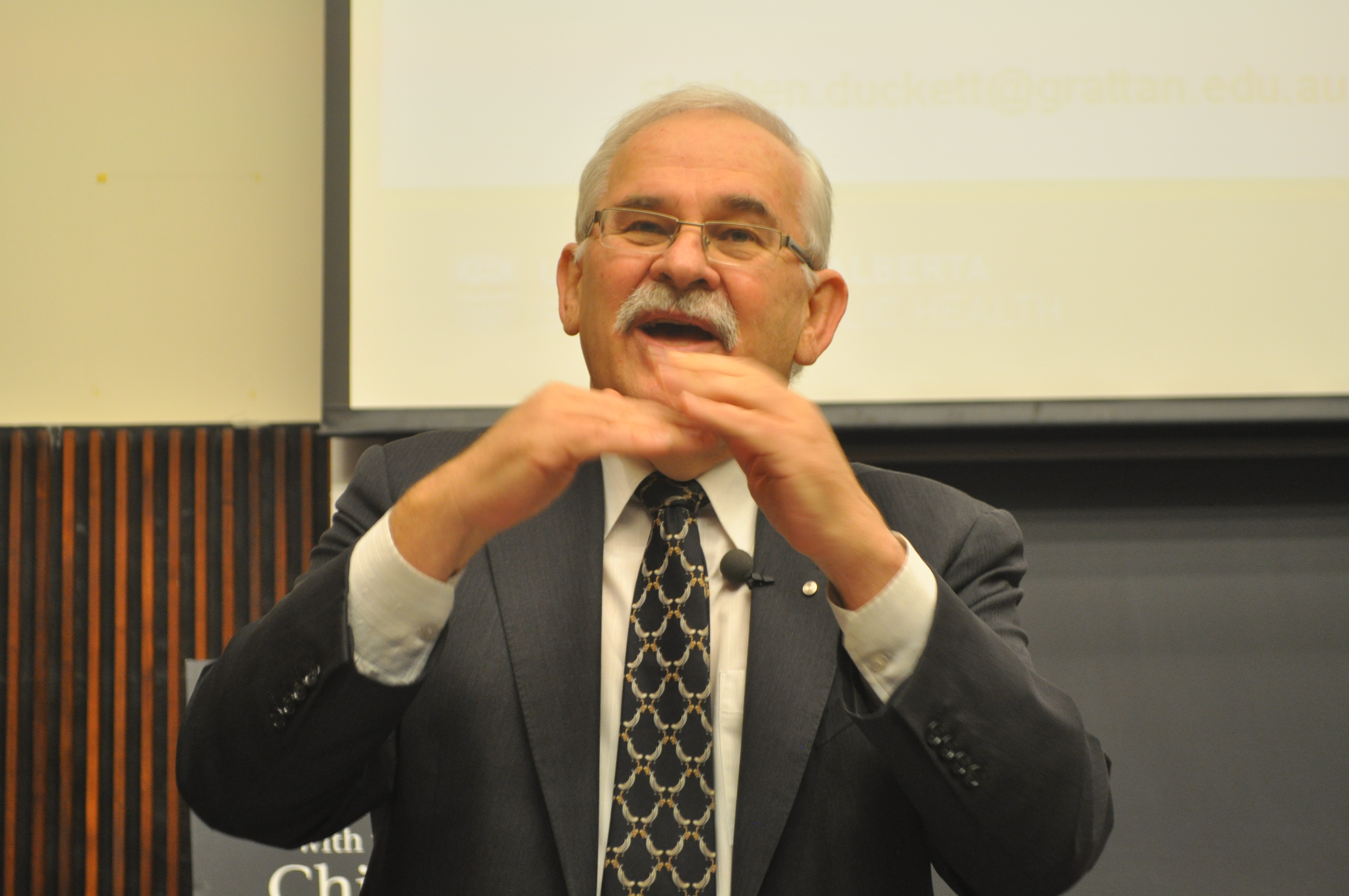
Stephen Duckett, the former CEO of Alberta Health Services, says privatization is among the reasons why Alberta's health costs are so high.

Stephen Duckett, the former CEO of Alberta Health Services, says privatization is among the reasons why Alberta’s health costs are so high.

The former head of Alberta Health Services says there are several reasons why Alberta consistently has the highest health costs and worst outcomes in Canada: provincial wealth, politics and privatization.

Stephen Duckett, speaking September 17 in Toronto at Longwood’s Breakfast With The Chiefs, was President and CEO of Alberta Health Services from 2009-10.

An Australian economist who still lives in Alberta, Duckett says that he inherited a situation where cataracts were outsourced in Calgary and Edmonton. The “unusual” method of tendering these contracts encouraged providers to bid high. Instead of giving contracts to the low bidder, Alberta Health Services took all the bids, set a uniform price by averaging the costs in the tenders, then made “everyone a winner” by contracting the service to all of the submitting companies.

When the private Health Resource Centre (HRC) was facing bankruptcy, Duckett says he was encouraged to find a way to help them out of their financial troubles. When he looked at the cost of publicly funded procedures performed by the bankrupt HRC, he realized that public hospitals were doing the same orthopaedic work for considerably less. For a hip arthroplasty, for example, the cost was $486 more per procedure at the private provider, $1,814 more for a foot and ankle procedure.

Similarly, Duckett was in office when Calgary workers took the unprecedented step of mounting a class action lawsuit against a Telus subsidiary which had been given a contract to do payroll for the former Calgary Health Region. The employees claimed to have been underpaid, found mistakes on their T-4 slips, and problems in vacation calculation.

Continue reading

Video: The millionaire CEO vs. the $12.88/hour home support worker

Striking home care workers from Renfrew County were told yesterday by hired security guards that there was no one at Extendicare’s Markham headquarters to meet with them — not even their millionaire CEO. It appears the executives fled in the face of their own employees.

The company had tried to get OPSEU to cancel the picket the day before, pledging to return to the bargaining table later this week.

The Renfrew County women had travelled a round trip of more than 1,000 kilometres to face down the executives who have been proposing extending their wage freeze to five years as well as make other changes that will adversely affect their worklife. Some have starting wages as low as $12.88 per hour. The workers are employees of ParaMed Home Health Care, a subsidiary of Extendicare.

They were supported on the picket line Tuesday by OPSEU activists and board.

To watch the video, click on the window above.


Former Infoway boss frustrated by slow implementation of health care IT

Photograph of former Canada Health Infoway CEO Richard Alvarez at Breakfast With the Chiefs.

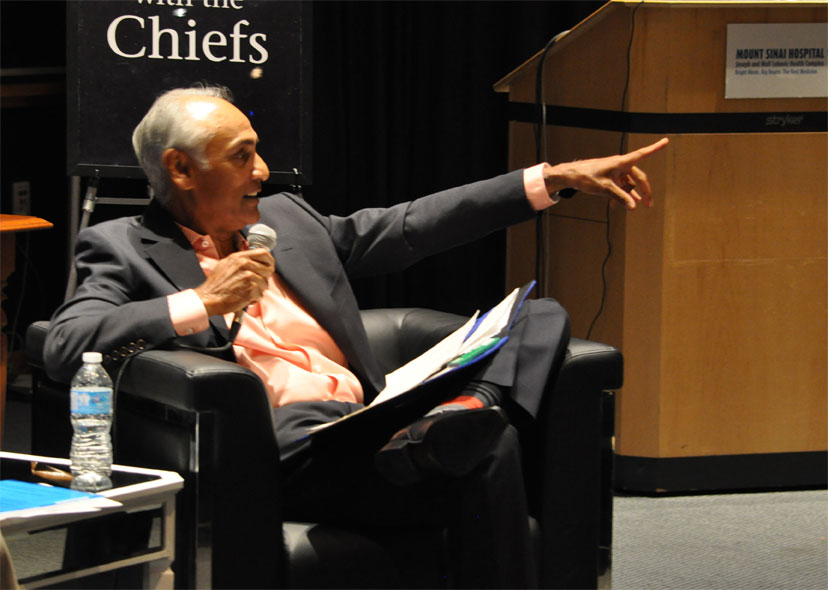
Richard Alvarez, former President and CEO of Canada Health Infoway, says slow pace of change among low-lights of his 10-years on the job.

When it comes to information technology, many Ontario medical practices are still more “Leave It To Beaver” than “Jetsons.” In that respect, Canada is falling behind other developed countries in integrating health care through new technologies.

Richard Alvarez, the recently departed President and CEO of Canada Health Infoway has many regrets over what he has been able to achieve after 10 years at the helm of the agency charged with coordinating federal and provincial investment in health care innovation and information technology.

Speaking at Longwood’s “Breakfast With The Chiefs” last week, Alvarez remained careful about his choice of words before a room full of the health sector’s leading decision-makers.

He needn’t have bothered.
Continue reading