Category Archives: Uncategorized

The trouble with Lean

Are you Lean, becoming Lean, doing Lean or thinking Lean?

Almost the entire province of Saskatchewan has gone Lean.

On the surface Lean offers everything front line workers should want. It is a system that addresses work process and reduces waste. It looks at the appropriate use of tools, including us humans. It allows for continual process improvement with a focus on quality. It involves and values front line workers in process design. Some managers claim it even saves money that can be reallocated elsewhere.

So why is it we hate it so much?

Lean is a system of continuous process improvement that originated at Japan’s Toyota in the 1930s (sometimes misidentified as the Toyota Productions System – TPS), although founder Taiichi Ohno admits that he generously ripped off Henry Ford for many of his process ideas. Others say the origins go back thousands of years to Africa. The term Lean itself came from a 1988 article on Toyota’s management system by an MIT student.

While initially geared to assembly line manufacturing, Lean has expanded in recent years to include the service sector.

Continue reading

Flu vaccine – CMAJ says it should be mandatory for health care workers

It’s a question of individual rights versus collective rights. The evidence is far from perfect, and the issue highly divisive among health care workers.

The influential Canadian Medical Association Journal raised many eyebrows when it recently took the position that all people who work in a health care institution be vaccinated for influenza.

The CMAJ’s Dr. Ken Flegel says the views are those of the editors of the Journal, not that of the Canadian Medical Association. There’s a good reason for that – most doctors do not get the annual flu shot. Speaking to a Toronto meeting of the National Union’s Canadian Health Professional Secretariat on November 20, Flegel laid down a challenge to the group: increase voluntary vaccination rates to avoid having the flu vaccine made mandatory in your province.

Dr. Ken Flegel

Dr. Ken Flegel, Senior Associate Editor of the Canadian Medical Association Journal.

British Columbia is the first Canadian province to take that step — a move health care workers in that province are challenging. While many support the need for broader vaccination rates, most unions are reluctant to give up the autonomy of health care workers to decide what goes into their body.

In Ontario many health care employers have defacto mandatory requirements – if you don’t get the shot, you don’t work under certain circumstances. Others are more willing to move unvaccinated health care workers to environments where there is less risk to patients or suggest that workers use up vacation credits when an outbreak takes place.

According to Flegel about 40 per cent of Canadian health care workers take the annual vaccine despite the fact that 10 to 20 per cent of health care workers are likely to get the annual influenza.

Continue reading

Gunn and Lewis receive awards in Port Hope

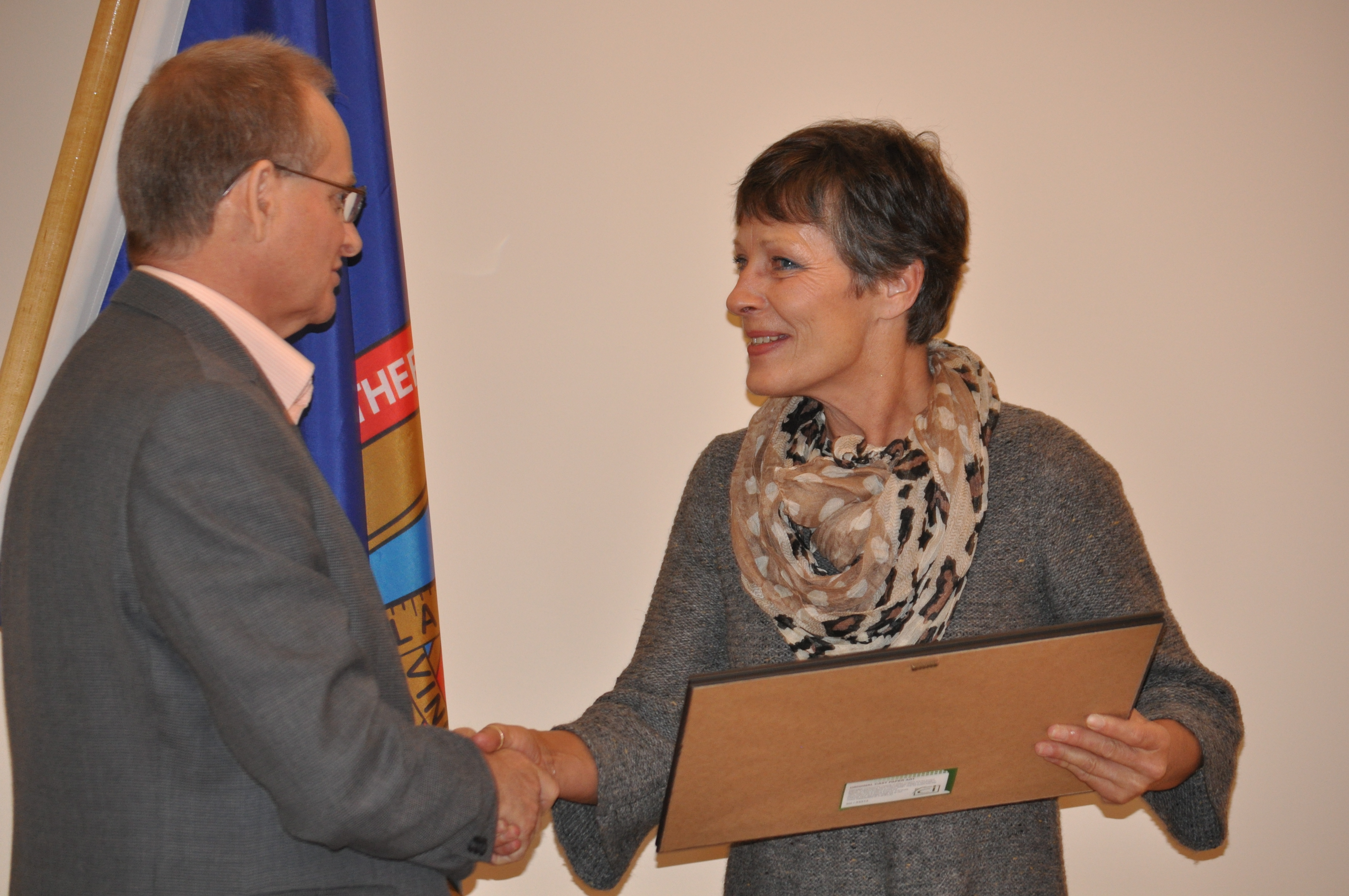
Norma Gunn receives the Ontario Federation of Labour 2012 Occupational Disability Advocacy Recognition Award in Port Hope November 15.

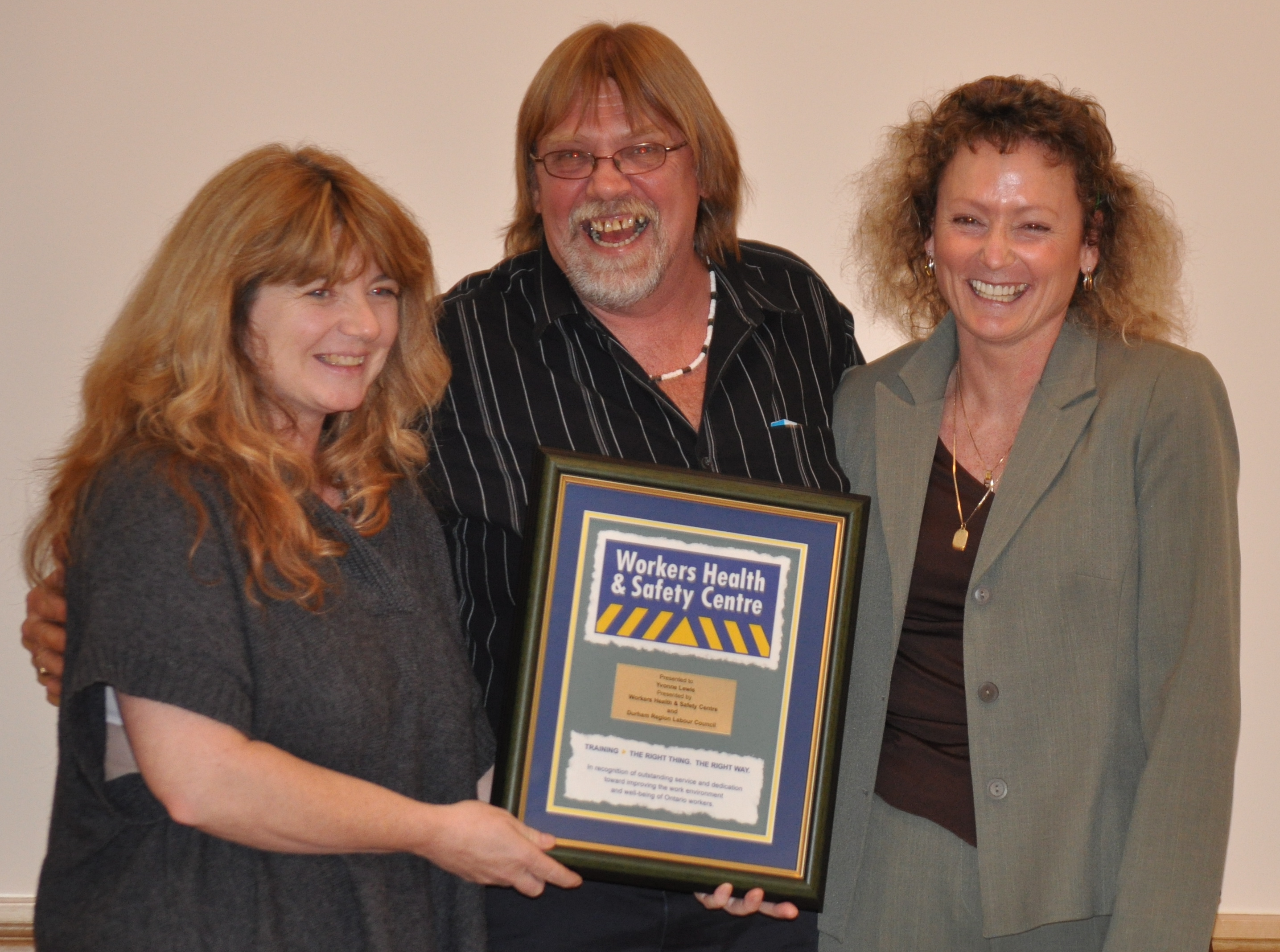
Local 331 Chief Steward receives the Workers Health and Safety Centre award on behalf of Yvonne Lewis. With her is Durham Labour Council President Jim Freeman and Kim Rushnell, Local 331 Secretary.

Local 331 Chief Steward Patti Lang receives the Workers Health and Safety Centre award on behalf of Yvonne Lewis. With her is Durham Labour Council President Jim Freeman and Kim Rushnell, Local 331 Secretary.

Two OPSEU advocates from Ontario Shores Centre for Mental Health Sciences received recognition last night in Port Hope for their health and safety work. Norma Gunn received a standing ovation when she accepted the Ontario Federation of Labour’s 2012 Occupational Disability Advocacy Recognition award for her work around post traumatic stress disorder. Gunn recently told her story in an Operation Maple video posted in October. The video was shown as part of the awards dinner. Local 331 Chief Steward (and Local President-elect) Patti Lang accepted the Workers Health and Safety Centre Award on behalf of Yvonne Lewis, who was unable to make the event at the last moment due to pressing family concerns. Lewis has been tireless in her fight to reduce incidents of workplace violence at Ontario Shores. Presently the Ministry of Labour is conducting a major investigation at the Whitby-based hospital.

Members of OPSEU Local 331 and staff rep Sherry Weese were present to celebrate the awards.

Why can’t you e-mail your doctor? Virtual health care is here, but will we accept it?

Dr. Ed Brown asked how many people in the audience were able to e-mail their family doctor? A small handful in the Mount Sinai hospital auditorium raised their hand. When asked who would like the ability to e-mail their doctor, everyone in the room raised their hands.

The situation is likely to change much sooner than we think. The question is, are health care providers ready, will the public participate, and will quality be more than an “acceptable second best?”

Brown, CEO of the non-profit Ontario Telemedicine Network, says Ontario is already one of the most advanced telemedicine environments in the world. Last year there were 204,058 telemedicine “events” in the province – a staggering 52 per cent growth over the previous year. There are slightly over a thousand regular users – this in a doctor population of 25,000.

Brown and Will Falk, a health care “leader” with PwC Canada, spoke at Longwood’s Breakfast With The Chiefs this morning on the growing virtualization of health care.

By conducting health care consultations virtually, Brown says that Ontarians have been spared travelling the equivalent of 275 trips to the moon and back. In Northern Ontario it has saved 108 million miles of travel. Given northern travel grants are available for citizens to access health care mostly in the south, that represents about $45 million in savings had all those trips actually taken place (likely not all would have).

Continue reading

50 Shades leading Windsor baby boom — Musyj

We don’t quite know what to make of this one.

Our most quotable of hospital CEOs is now saying that the erotic bestseller 50 Shades of Grey may be responsible for a mini baby boom in Windsor, Ontario.

Windsor Regional Hospital CEO David Musyj has been all over the media recently after speculating a 30 per cent jump in births over a six-day period may have something to do with the publishing nine months earlier of E. L. James’ steamy novel.

“If you back up the calendar, the book of 50 Shades of Grey was released worldwide and in Canada earlier this year,” he told the media. “There is talk around the hospital that it is possible that the release of that book has something to do with the increase in births.”

Our national broadcaster – the CBC — took this story very seriously, consulting a sexuality professor and a demographer. The professor suggests Musyj could be right while the demographer is more cautious given there is an overall “echo effect” – the children of boomers are now having kids of their own.

Of course, the question is, why only in Windsor? Are women there just particularly fast readers and subsequently ahead of the trend?  Is 50 Shades of Grey doing for the Windsor library’s circulation what the book is doing for that of its readers?

Musyj also suggests that blackouts and big collective agreements may also spur mini-baby booms at his hospital.

You might say the results are a secondary labour movement.

OMA Deal: Surprise! Bargaining works

It’s a sign of our times when a simple labour agreement can be framed as a political triumph.

The latest is news the Ontario Medical Association reached a deal with the provincial government this week on behalf of 25,000 doctors.

Here’s the shocker: there was some give and take. This wasn’t supposed to be possible in this new austerity landscape.

The government took two years of zeros. The docs got the government to reverse some of the unilateral fee cuts from earlier this year.

Don’t we all feel better now?

Continue reading

Mortality Rates: Report suggests hospitals may be gaming the system

Ranking the performance of a public hospital has always been fraught with danger. Hospitals have much at stake with the release of performance data, including everything from funding allocations to the bonuses received by top executives.

Let’s say there is much incentive to get creative in the public reporting of such metrics.

In recent years the media have made much about hospital standardized mortality ratios (HSMR), a measure imported from UK that looks at the number of unexpected deaths that take place in a hospital.

Now a study funded by Oshawa’s Lakeridge Health suggests that the HSMR may be subject to considerable gaming to improve the image of certain hospitals.

Continue reading

Updated: NDP health critic consults Oshawa community – no LHIN in sight

NDP Health Critic France Gelinas with OPSEU's Sara Labelle.

NDP Health Critic France Gelinas with OPSEU’s Sara Labelle.

The organizers had to put out more chairs as the audience filled the small room in the Oshawa Seniors Centre.

Upstairs they were playing Bingo, downstairs about 50 people came to talk about their frustrations with a health care system that is failing them.

NDP Health critic France Gelinas said there was a silver lining to the proroguing of the provincial parliament – it was an opportunity for her to get out and talk to citizens across Ontario about the care they are receiving.

Gelinas was part of a panel of three this night: OPSEU’s Sara Labelle and the Ontario Health Coalition’s Natalie Mehra rounded out the bill. An Oshawa civic politician, Amy England, did the facilitation. But most of the talking this evening would come from the audience, not the front of the room.

The owner of a supportive housing facility railed against a forced merger by the Local Health Integration Network.

Another complained about having to leave a crowded ER at Lakeridge Health because the noise was “like a rock concert.” He wanted to know what the statistics were on people who left the ER against medical advice.

One of the event organizers told the heartbreaking story of her lengthy struggle to reunite her elderly parents in the same long-term care facility.

“This is cruel – there is no reason for this,” Gelinas said.

Continue reading

Worth repeating: We can do better — Matthews

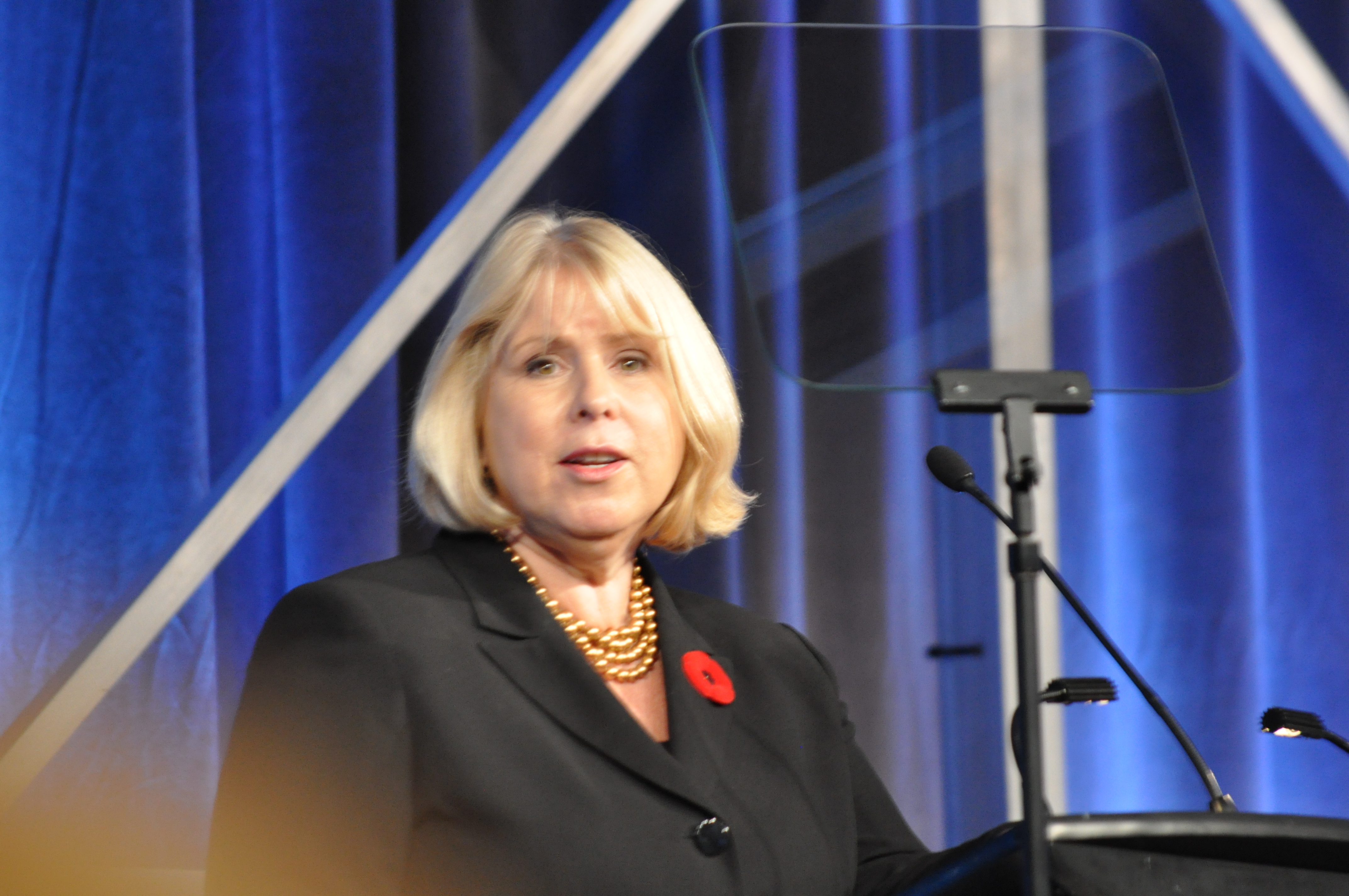
Health Minister Deb Matthews at the OHA HealthAchieve.

Health Minister Deb Matthews at the OHA HealthAchieve.

At today’s Ontario Hospital Association HealthAchieve Minister Deb Matthews gave an illustration of how integrated health service delivery can save money and enhance patient care. She makes clear that we do need to do better. The question is, will all these interlocking parts receive the funding and coordination they need to transition to this new world? In Deb Matthews own words:

“I want to tell you a story about Bernice. This is a true story. And I say thank you to the HNHB LHIN for this story. This is one patient’s story, Bernice. Only the name has been changed.

Bernice lives at home. CCAC visits once a week and her kids are regular visitors. One day, she falls and gashes her arm. She calls the ambulance, goes to the hospital by ambulance. They fix her up, send her on her way. Her family doctor isn’t notified, and there’s no follow-up care. When the CCAC next comes, they’re surprised to that she’s been injured.

A year later, Bernice falls again, and breaks her hip. Another ambulance trip to the hospital. She waits three days in the ER, then gets transferred to another hospital where she has surgery. She spends six months recovering in the hospital, and got MRSA. She sells her house and moves to long-term care.

So you look at five years of care for Bernice, we spent close to half a million dollars.

Now, we have to ask ourselves, did it have to be that way? Were we doing our collective best for Bernice?

So let’s imagine what that journey could have looked like.

Bernice lives at home. CCAC comes once a week and her kids are regular visitors. One day, she falls and gashes her arm. EMS comes, fixes her up right on the spot, notifies her GP on the spot and makes a geriatric assessment referral. Her children go with her to the appointment, and learn how they can improve Bernice’s functional ability. Bernice is enrolled in a falls prevention program, where she makes new friends and starts going to Bingo.

One day, leaving Bingo, she slips and falls on the ice and breaks her leg. She is taken to her local community hospital. Staff there call the designated referral hospital. Bernice is transferred there, has her surgery right away, then is transferred back to the community hospital where she recovers. A week later, she is discharged to a transitional care program for a month. Then she goes back home, with on-going support to maintain her functional ability.

Now that care would cost about $100,000 for five years. So when you look at the needs of real people and ask ourselves, are we doing our collective best? I think we all have to agree that we can do better.”

CBS warns of coming job losses in national meeting with labour

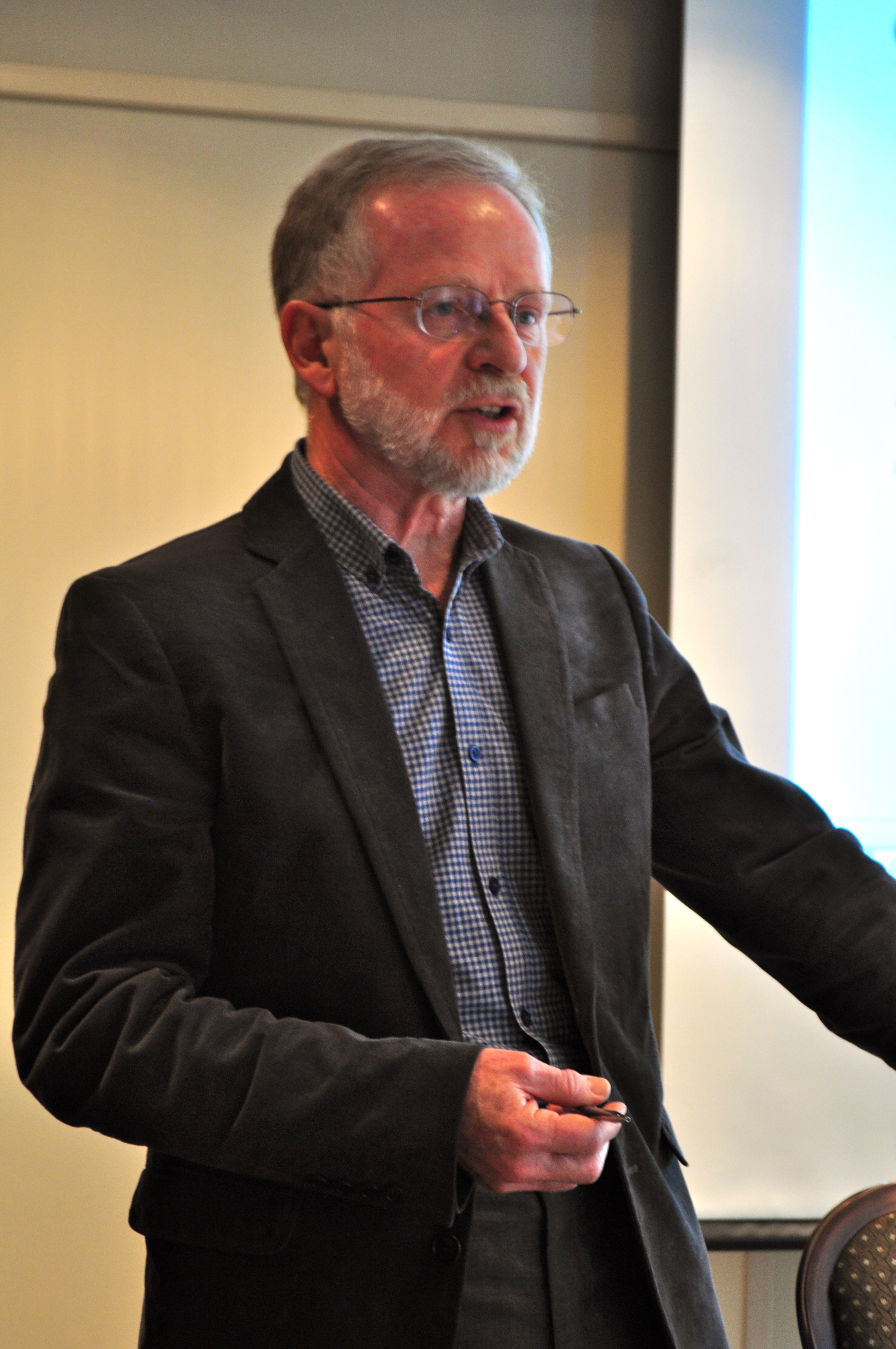
Canadian Blood Services executives Andrew Pateman and Ian Mumford.

Canadian Blood Services says the organization of the future is going to require fewer people. Caught in a funding squeeze by their provincial funders, CBS says they have to compete with other health priorities and money is getting tighter and tighter.

“The focus is not on cost cutting, but on process improvement,” says Andrew Pateman, Vice-President of Talent Management and Corporate Strategy for CBS. Speaking in Toronto November 2nd at a national meeting of unions representing more than 4,000 CBS workers, Pateman spoke about using new technology and reducing steps to improve process efficiency.

Pateman said meeting with the provinces was like getting in a mixed martial arts ring. “We’re getting beat up,” he said.

In his 18 months with the organization Pateman says he has conducted two employee surveys, the results of the second being calculated now. He said he wasn’t surprised that staff felt that “management was not leading in the way they should.”

Both Pateman and Chief Operating Officer (COO) Ian Mumford acknowledged they had work to do in better communicating with staff, including involving front line workers in the decision-making process. Mumford had specifically asked to address the meeting organized by labour.

The CBS COO said they expect managers to carry on a variety of roles from donor and client relations to good financial management. On top of that they are expected to be skilled negotiators and be able to manage labour relations between contracts.

Continue reading